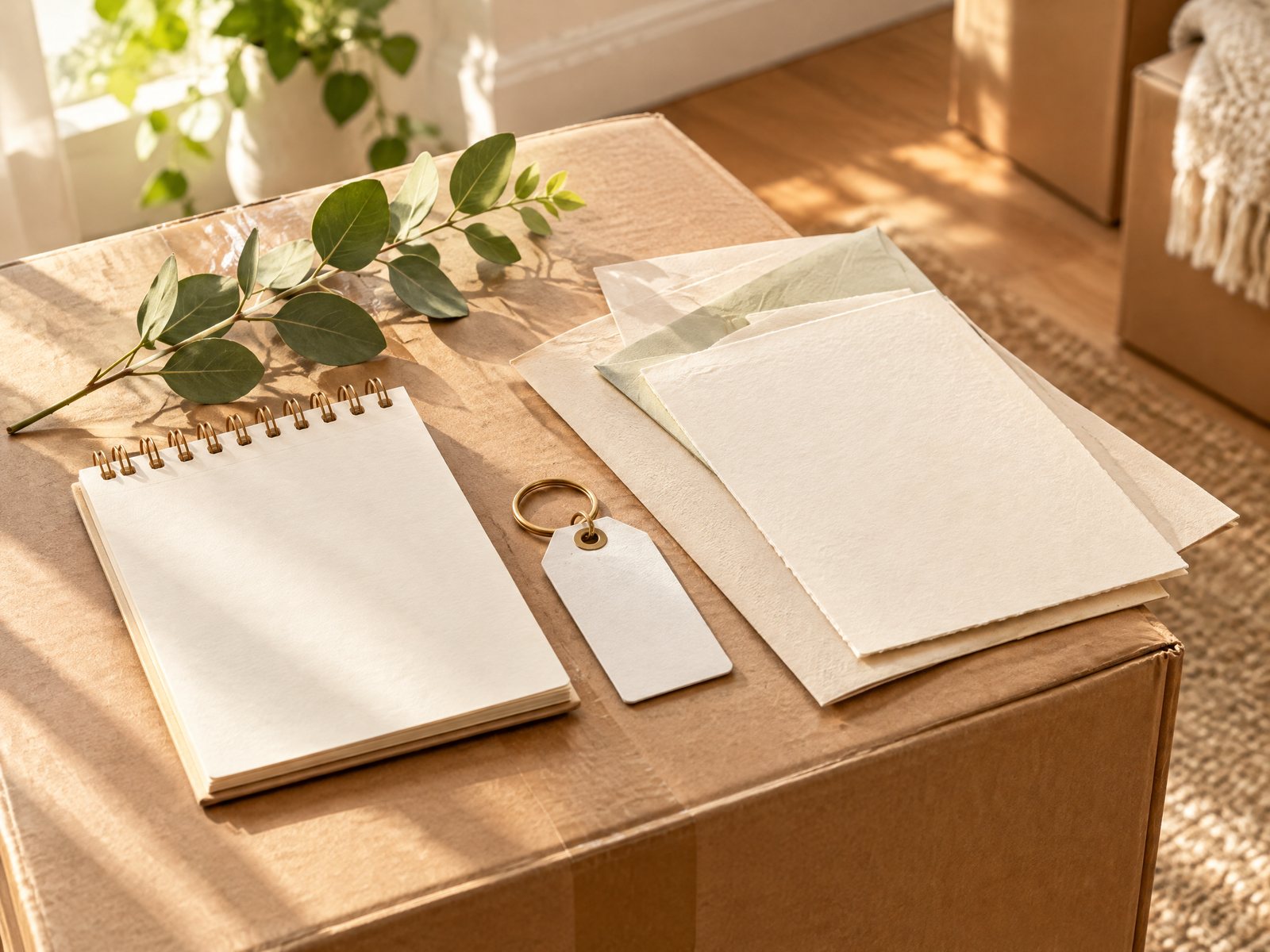
A new home can feel less like a fresh start than a room full of loose ends: Which switch controls the hallway light? Where did the spare key go? Is that unfamiliar sound normal for the building, or worth asking about? In the first week after a move, the problem is rarely a lack of motivation. It is that practical questions arrive while boxes, receipts, addresses, and half-built routines compete for attention. Farouk Book Store’s stationery selection can give those observations a visible place without turning the transition into one enormous checklist.
The useful distinction is this: a first-week page is a record of what you are learning, not a command to finish everything immediately. One page can hold a question for the landlord or housemate, another can capture where an item ended up, and a third can preserve a small detail that makes the space feel like yours. Keeping those jobs separate makes the notebook easier to revisit when your energy or time changes.
Start with a three-page landing pad
Before decorating or organizing, set up three simple page types. Label the first Questions, the second Found a Home, and the third Small Wins. These headings are intentionally plain. They leave room for the specific realities of your move rather than forcing every observation into a productivity system.
On Questions, write things that need clarification rather than immediate action. Examples include “Where is the water shutoff?” “Which bin is collected on which day?” or “Does the bedroom window latch fully?” Add the source beside each question if that matters: property manager, previous resident, utility provider, or housemate. A question with a clear audience is less likely to circulate in your head as an indistinct worry. Avoid recording sensitive access codes or other private credentials on an open pad; use a secure method for those instead.
Found a Home is for decisions you have already made. “Extension cords in the left hall cupboard,” “spare linens in the second drawer,” and “mail goes on the small entry tray” are useful because they reduce repeated searching. Write the location as it exists now, not as you hope the room will look after a future reorganization. If a box is still sealed, say so. A truthful note is more useful than an aspirational one.
Small Wins gives the week a scale beyond unpacking. It might say “made coffee without opening three boxes,” “met the neighbor by the lift,” or “found a quiet place for evening reading.” This is not a claim that stationery fixes the stress of moving. It is simply a way to retain concrete evidence of a day that contained more than errands and decisions.
For a compact, movable setup, the Notepads collection is a practical place to browse. You can keep the three pages together in a drawer or move one to the kitchen while checking a cupboard. Choose the format that matches how you actually move through the home, rather than buying supplies for an ideal routine.
Match the paper to the question
Different first-week observations have different sizes. A tiny adhesive note works for a single prompt near the relevant object; a loose memo page is better for a cluster of details you will review later. Farouk’s Beach Cute Aesthetic Sticky Note, for example, is a 3-by-3-inch paper pad with 50 sheets and adhesive backing. That makes it suitable for a short label such as “measure this shelf” or “ask about this switch,” placed temporarily on a notebook page or a box—not for a long inventory.
If you want a gentle visual cue for a question that follows you from room to room, the Dreamy Thoughts Cute Aesthetic Sticky Notes offer another compact paper option. The listed 3-by-3-inch, 50-sheet format can hold one decision at a time. Try a strict rule: one note, one question, one next conversation. When a note grows into a paragraph, it is signaling that the matter belongs on a larger page.
For that larger page, the Purple Gradient Clouds Aesthetic Message Memo Notepad is listed as a 4-by-6-inch, 50-sheet non-adhesive paper pad. Its loose pages suit a “house facts” spread: room name, observation, question, and status. Keep the status descriptive—“not checked,” “asked,” “confirmed,” or “revisit later”—rather than treating the page as a demand to complete every item. Because it is not sticky, place finished pages in a folder or clip them together instead of expecting them to stay on a wall.
These are catalog examples, not a claim that Farouk manufactures every design. The shop’s role here is editorial: offering paper goods you can select for a particular first-week use. Check the individual listing for current details, and remember that an online bag prepares an email order request rather than completing payment; inventory, taxes, and shipping need confirmation.
Turn observations into a small weekly record
Use one page per day only if that feels natural. Otherwise, divide a single sheet into four blocks: noticed, decided, asked, and leave for later. The first block might hold “afternoon sun reaches the back wall.” The second could record “reading lamp stays beside the sofa for now.” The third captures a question for someone else. The last protects you from converting every unknown into an urgent project.
A useful example is the kitchen. On day one, “noticed” might read: “one deep drawer near the sink; mugs currently in a moving box.” Under “decided,” write: “use the upper shelf for daily cups until the routine settles.” Under “asked,” write: “is the extractor switch separate from the light?” Under “leave for later,” write: “compare storage after one grocery trip.” This sequence creates a record of reasoning, not merely a list of objects.
Add a small “repeat or revise?” line when a decision affects daily movement. If the entry tray collects mail successfully for three days, keep it. If it becomes a pile beside the door, revise the location instead of blaming yourself for failing to maintain a system. A first week is a trial period for the home’s rhythms. Your page should make adjustments visible and ordinary.
For shared homes, identify whose answer is needed without assigning a task to someone who has not agreed to it. “Ask housemate about shelf split” is different from “housemate must clear shelf.” For rented homes, distinguish your own preference from a maintenance question. “Would like brighter bulb” belongs in one category; “window latch feels loose” belongs in another. The page is a communication aid, not a substitute for the appropriate person or channel.
Handle the failure cases deliberately
The page becomes another intimidating to-do list. Cross out the action verbs and rewrite entries as observations or questions. Change “organize entire hallway” to “shoes gather by the door after rain.” The revised note points to a real pattern and leaves the solution open. Limit the day’s follow-up to one practical question and one small placement decision.
You keep losing the notes. Choose a home for the paper itself: the top drawer, a folder near the entry, or one notebook that travels between rooms. Adhesive notes can mark the notebook page, but they should not become a trail across walls and appliances. At the end of each evening, move loose notes into one review spot. If a note has no future use, discard it rather than preserving clutter in the name of documentation.
The page is too decorative to read. Put the heading and date first, then add visual accents only at the edge. A sticker or strip of tape can distinguish Questions from Small Wins, but it should not cover the words you need later. In the first week, legibility is a design decision. Leave generous blank space so an answer can be added beside the original question.
A practical concern stays vague. Replace “something is odd in the bathroom” with observable language: “drip appears below the right side of the tap after use.” Avoid diagnosing the cause. Note when you noticed it and who should receive the question. The purpose is a clearer conversation, not a professional assessment.
You stop using the system after two days. Do not restart with a larger setup. Keep one half-page titled “What I need to remember,” and write only three lines at the end of the day. A method that survives a busy Tuesday is more useful than a beautiful seven-section spread that requires perfect attention. After the first week, archive the pages, carry forward only unresolved questions, and let the rest become a snapshot of how the home began to take shape.
A small paper record cannot settle every uncertainty that comes with moving. It can, however, separate a question from a decision, a location from a future plan, and a genuine small win from the noise of unpacking. That separation gives the first week a practical memory—one you can consult without demanding that your new home be finished before it feels lived in.
If you need help selecting a format or checking a current item, contact Farouk Book Store.
Related reading: How to Make a Daily To-Do List Without Overplanning, How to Use Sticky Notes for Weekly Planning, and Stationery Care and Storage in Warm, Dry Climates.