A daily to-do list works best as a short decision-making tool, not a miniature forecast of every minute. If your list regularly becomes longer than your day, or a delayed appointment makes the whole plan feel useless, the problem may be overplanning rather than a lack of discipline. A lighter method can still give you direction: choose a few meaningful outcomes, leave room for interruptions, and make the next action clear.
The goal is not to predict the day perfectly. It is to create a list you can use when energy, time, and priorities change.
1. Start with a realistic picture of the day
Before writing tasks, check the shape of the day. Look for fixed commitments, travel, meals, recovery time, and periods when you are likely to be unavailable. This takes a minute or two and prevents the common mistake of treating every hour as open work time.
Then ask three practical questions:
- What must happen today? These are tasks with a real deadline, a consequence, or a dependency. Examples include submitting an application before a closing time, attending an appointment, or sending information someone needs to continue their work.
- What would make today feel useful? Choose one or two important tasks that do not have to be finished today but deserve progress.
- What can wait without causing trouble? Move low-impact tasks out of today rather than squeezing them into an already crowded list.
A helpful limit is to select one “must,” two “shoulds,” and a small number of “coulds.” The exact number is less important than leaving visible space. For example:
- Must: send the signed form before 4 p.m.
- Should: draft the first section of a report; take a 30-minute walk
- Could: tidy the downloads folder; compare two recipes for dinner
This structure prevents a full inbox from masquerading as a set of equal priorities. If everything is marked urgent, use a consequence test: “What specifically happens if this moves to tomorrow?” If the answer is “nothing important,” it belongs in a later list or a reference note.
A small notepad can make this first pass intentionally limited. The Straight-a-student Check List Cute Aesthetic Sticky Notes can hold a compact set of checkable tasks, while the broader notepads collection gives you other formats for short planning notes. Choose a surface that matches how much you genuinely need to see—not one that invites you to fill every available inch.
2. Turn vague intentions into next actions
Overplanning often begins with tasks that are too broad. “Work on taxes,” “organize the project,” or “get healthier” can expand indefinitely because they describe an outcome without identifying a first move. Rewrite each item as an action that can begin without another planning session.
Try these conversions:
- “Work on presentation” becomes “open the presentation and write three possible section headings.”
- “Clean the kitchen” becomes “clear the counter and load the dishwasher.”
- “Study biology” becomes “review pages 18–25 and write five recall questions.”
- “Plan the trip” becomes “list the three dates that could work.”
A next action should be specific enough that you can recognize when it is done, but not so detailed that the list becomes a project-management system. If a task has several genuine stages, write only the first stage on today’s list and keep the later stages elsewhere. Once the first stage is complete, decide whether the next one belongs today.
Estimate effort in broad bands rather than precise minutes. “Five minutes,” “about half an hour,” and “a focused block” are often more useful than an exact forecast. Exact estimates can create false certainty, especially for creative, administrative, or people-dependent work. If you need to protect time, use a range: “draft introduction, 30–60 minutes.”
For each important task, add a stopping point. A stopping point answers, “What counts as enough for today?” For example, enough may mean a rough outline, ten sorted receipts, or one phone call—not a flawless finished project. This protects a daily list from turning one demanding item into an all-day obligation.
If you prefer loose paper for this stage, the Starry Clouds Gradient Aesthetic Dreamy Memo Notepad is described as a non-adhesive 4 x 6 in memo pad suitable for to-do lists and reminders. A loose page can be useful when you want to move a list beside your keyboard or fold it into a notebook. If you need the list to stay attached to a page, use an adhesive note instead; the choice is functional, not a test of how organized you are.
3. Build flexibility into the list
A plan becomes fragile when it assumes uninterrupted attention. Instead of scheduling every task back-to-back, add buffers and identify what can be dropped first. This does not mean making a vague list. It means acknowledging that real days contain questions, delays, changing energy, and tasks that take longer than expected.
A simple flexible layout has three parts:
1. Anchor: one task or appointment that gives the day structure. This might be a meeting, a deadline, or a focused work block. 2. Progress: one or two tasks that move an important responsibility forward. 3. Optional: small tasks that are useful only if time and energy remain.
Put the anchor and progress items at the top. Keep optional tasks visibly separate so that not finishing them does not feel like failure. You can mark them with a symbol, place them in a lower section, or write them on a second note.
Use buffers in a practical way. If you expect a task to take 45 minutes, do not automatically place another 45-minute task immediately afterward. Leave a gap for setup, messages, cleanup, or overruns. For an appointment across town, account for the transition rather than listing the appointment as if travel does not exist. You do not need to calculate every minute; you only need enough margin to avoid making the next commitment impossible.
Energy matters as much as clock time. Put concentration-heavy work near the part of the day when you usually think clearly. Group shallow tasks—such as filing, routine replies, or putting items away—when your attention is lower. If your energy is uncertain, write a minimum version: “read two pages,” “reply to the most urgent message,” or “walk for ten minutes.” A minimum version keeps the habit alive without pretending that every day has identical capacity.
When a new request appears, do not simply add it. Decide whether it is urgent, whether it replaces something, or whether it belongs on a later list. A useful sentence is: “If I do this today, which current item moves?” That trade-off makes hidden workload visible and helps you say yes deliberately.
4. Review, reset, and learn from misses
A daily list should be adjusted, not judged. Set a short review point—at the end of the workday, after dinner, or before bed—and look at what happened. Avoid turning the review into a second planning marathon.
Use four quick questions:
- What was completed?
- What still matters?
- What changed or took longer than expected?
- What is the smallest useful list for tomorrow?
Carry an item forward only after reconsidering it. Copying every unfinished task can create guilt without improving the plan. If “organize receipts” has moved three times, diagnose the obstacle. Is the task too large, unclear, unpleasant, dependent on missing information, or simply not important enough? Change the next action, schedule a short starting block, ask for what is missing, or remove it.
When the day goes off track, use a reset instead of abandoning the list. Pause for two minutes, identify the next fixed commitment, and choose one meaningful action that can fit before or after it. Cross out optional tasks for the day. A reset might look like this:
- 2:00 p.m. appointment remains fixed.
- The delayed report becomes “write the conclusion outline,” not “finish report.”
- Grocery shopping moves to tomorrow because there is enough food at home.
- A ten-minute tidy replaces the original 30-minute cleaning block.
Notice patterns over several days rather than drawing conclusions from one difficult day. If you repeatedly underestimate email, add a buffer. If you avoid a task because the first step is unclear, rewrite it. If your lists are consistently short and useful, keep the method; there is no prize for adding more structure.
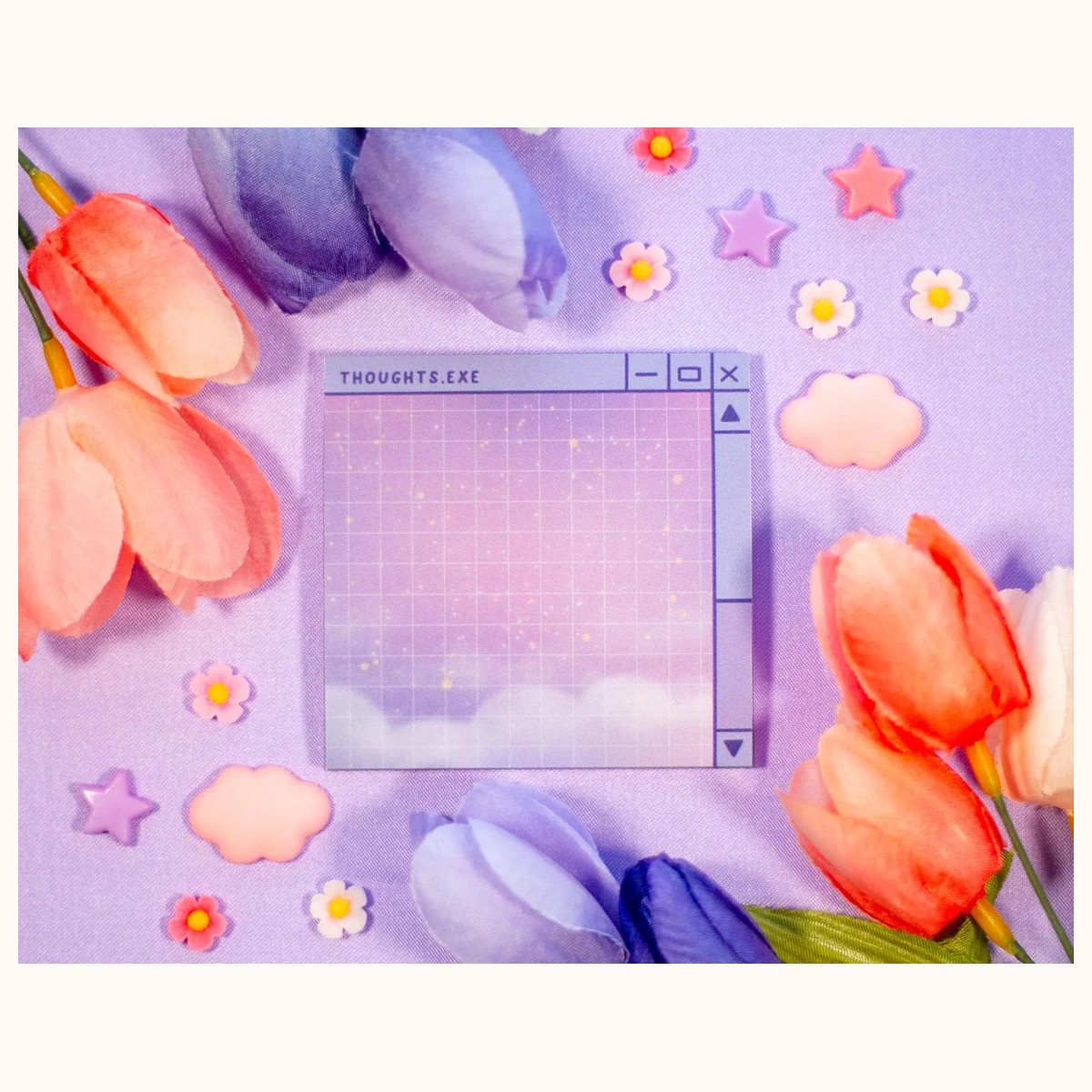
For a portable reset, a small adhesive pad can work as a temporary “today only” list: write three priorities, place it where you will see it, and discard or archive it during the review. A pad such as Dreamy Thoughts Cute Aesthetic Sticky Notes is listed as a 3 x 3 in paper sticky-note pad with 50 sheets, useful for brief reminders and repositionable planning notes. Check the current product page for details before choosing a format, and use Farouk Book Store’s contact page if you need to verify catalog information.
The best daily to-do list is not the one that captures everything. It is the one that helps you choose what matters, start without confusion, and recover when the day changes. Keep the list short enough to read at a glance, specific enough to act on, and flexible enough to survive real life. Over time, your review will show you how much you can reasonably carry—and that knowledge is more useful than a perfectly packed schedule.
Related reading: How to Choose Stickers for Journals and Planners · 2026 Stationery Trends: Color, Texture, and Joy · How to Build a Personalized Gift Bundle