Good stationery care and storage does not require a complicated system. In a warm, dry climate, the main goals are to limit direct sunlight, keep dust away, prevent unnecessary bending, and make frequently used items easy to reach. Paper pads, stickers, washi tape, bookmarks, and desk accessories can all last comfortably when their storage matches how you use them.
The most useful approach is to divide supplies into three groups: items used every day, items kept for a project, and items being saved for later. Keep everyday stationery close at hand, place project materials together in a clean container, and protect collectible or seasonal pieces from light and handling. You can browse more desk-friendly items in the accessories collection. This guide explains how to make those decisions without overpacking your supplies or treating every item as if it needs the same conditions.
Why warm, dry rooms need a simple stationery plan
Dry air is not automatically harmful to paper, but it can make lightweight sheets feel more brittle or encourage static when pages are handled. Heat and strong daylight are usually more practical concerns than the room temperature alone. A sunny windowsill, a shelf above a warm appliance, or a car interior can expose stationery to conditions that are much harsher than a shaded desk drawer.
Start by choosing a storage location with three qualities:
- Shade: Keep paper and printed surfaces away from direct sun. A drawer, cupboard, or opaque box is preferable to an open shelf beside a bright window.
- Stability: Avoid places that heat up and cool down repeatedly, such as beside a cooker, radiator, sunny window, or frequently used electrical appliance.
- Cleanliness: Dust is easiest to remove from a closed box or lidded file than from loose stacks. Choose a smooth, dry storage surface and wipe it before placing supplies there.
Do not seal damp items inside an airtight container simply because the climate is dry. If stationery has been exposed to condensation, a spill, or a humid room, let it dry fully in a shaded, well-ventilated place first. The decision is simple: protect dry stationery from dust and light, but do not trap moisture with it.
A weekly visual check is enough for most home collections. Look for curled corners, dusty adhesive edges, tape that no longer unwinds smoothly, or pages that have been pressed under heavy objects. Move anything showing a problem to a separate “use soon” area rather than returning it to long-term storage.
Storing paper, sticky notes, and memo pads
Paper items are easiest to preserve when they lie flat and are not tightly compressed. Store memo pads and planner pads on a level shelf or in a document box. Do not stack a tall pile where the bottom pad carries more weight than you can comfortably lift. If a pad has a top binding or tear-off edge, keep that edge supported so it does not become the only point bearing pressure.
The Laundromat To Do List Planner Pad is a useful example of an item that should be stored flat. It has 50 non-adhesive sheets, so it can be placed in a folder or shallow tray rather than in a sticky-note dispenser. If you want to carry a few pages, remove them carefully and slide them into a rigid notebook pocket; do not bend the full pad to fit a small bag.
Sticky notes need a slightly different routine. Keep the adhesive edge clean and avoid storing a pad loose in a pocket with coins, crumbs, or pencil shavings. A small drawer compartment or resealable sleeve can keep the pad square while still allowing quick access. Place sticky notes adhesive-side down only when the package or pad design supports that orientation; otherwise, keep the pad in its normal form so the edges are not repeatedly peeled or crushed.
For example, the Blooming Records Sticky Notes are 3 x 3 inch sheets with adhesive backing. Keep the pad on a flat surface and use clean, dry fingers when lifting a note. If a note curls after being carried, press it under a book for a short period rather than rubbing the adhesive edge or applying heat.
When a paper stack starts to curl, first identify the cause. If only the outer corners are bent, flatten the stack under a light, evenly distributed weight. If pages feel unusually fragile, stop forcing them flat and move them to a shaded, lower-traffic location. If marks or discoloration appear, photograph the issue and separate the item; further handling may make it harder to identify whether the cause was light, dust, pressure, or moisture.
Protecting stickers, washi tape, and printed surfaces
Stickers and decorative tape are practical supplies, but their adhesive surfaces benefit from clean storage. Keep sticker sheets in clear sleeves, a portfolio, or a flat file where the backing cannot rub against rough objects. Store sheets upright only when they are supported between rigid dividers; otherwise, a flat arrangement reduces corner bends.
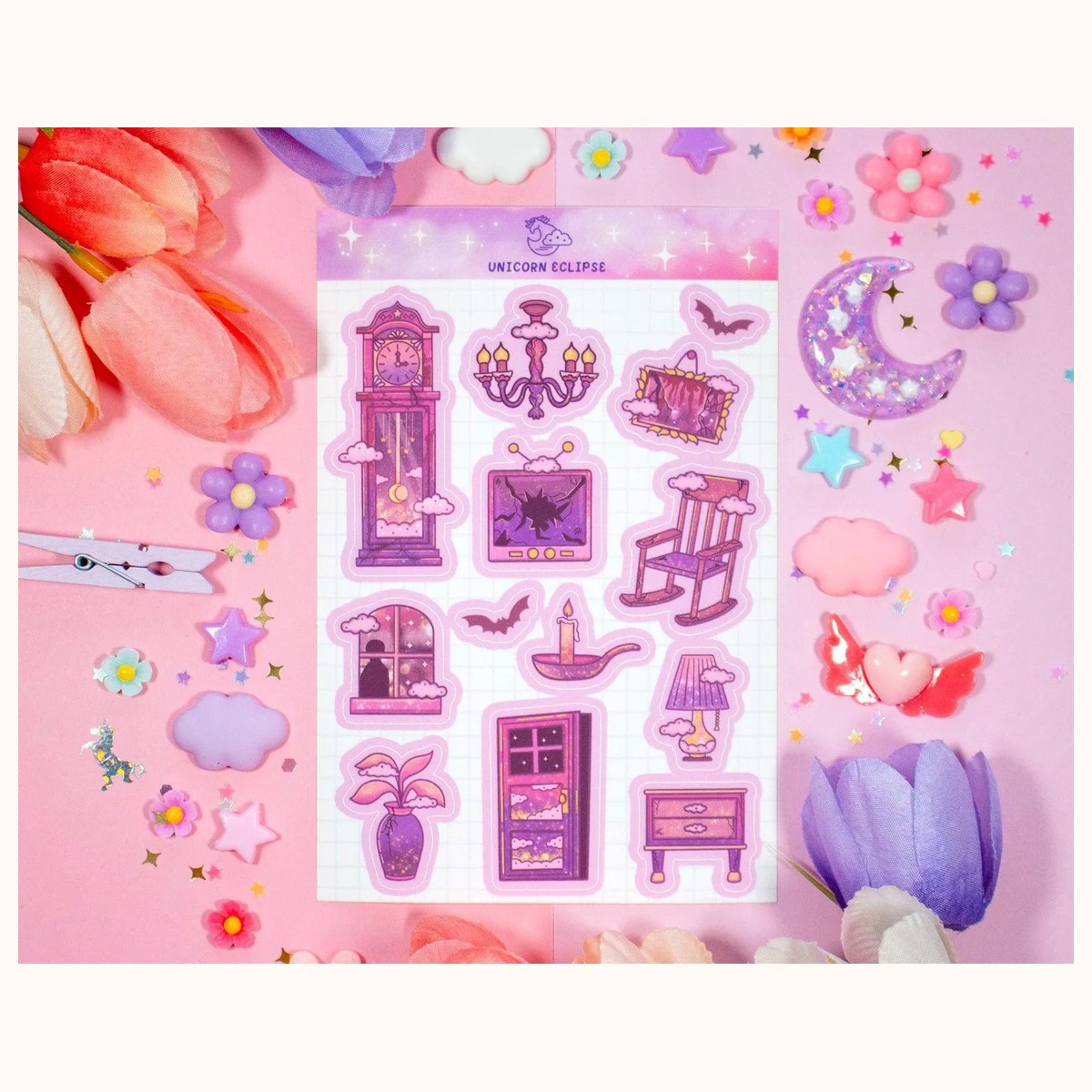
The Haunted House Sticker Sheet is a compact 4 x 6 inch sheet with 13 designs. A sleeve sized close to the sheet helps prevent it from sliding around in a box. Keep the sleeve out of direct sun even if the stickers are intended for everyday items, because storage and outdoor use are separate decisions. A product described as waterproof for use on an item does not mean it should be left in a hot vehicle or exposed to constant sunlight before application.
Washi tape is best kept on a clean shelf or in a small box where rolls cannot collect dust on their exposed edges. Keep rolls upright if that makes it easier to see the designs, but prevent them from rolling into one another. A divided tray is useful when you have several patterns; a loose pile is more likely to hide a roll and put pressure on the outer tape.
If tape begins to unwind unevenly, do not pull hard. Find the loose end, smooth it back down, and turn the roll slowly. If the edge is dusty or flattened, cut away only the damaged section with clean scissors. When a roll feels unusually soft, sticky, or difficult to separate, move it to a cooler shaded area and test a short piece on scrap paper before using it in a finished journal or card.
For all adhesive products, test first when the surface matters. Apply one small piece to an inconspicuous area, wait, and remove it slowly. This is particularly sensible for painted surfaces, delicate book jackets, or older paper. Product descriptions can tell you how an item is intended to function, but the condition of your particular surface still determines the safest choice.
Organizing accessories for daily use and long-term storage
Accessories often fail from clutter rather than climate. A pencil case, book sleeve, bookmark, or keychain can become scratched, dusty, or misshapen when mixed with sharp tools and heavy objects. Give each category a home and keep the storage container no larger than necessary.
The Stacked Books Cute Aesthetic Pencil Case is an 8 x 5 inch canvas zipper pouch intended for pens, pencils, erasers, chargers, and other small essentials. Use it as a working kit rather than a catch-all bin: remove dried pens, broken leads, and items that could snag the fabric. Empty the pouch occasionally and shake out debris over a wastebasket. If the printed surface needs attention, begin with a gentle dry wipe and follow any care information supplied with the product; avoid saturating it without a reason.
For glossy cardstock bookmarks, store them between book pages only while reading, not as a permanent storage method in a book that is tightly packed. A narrow card sleeve or a small envelope keeps corners from rubbing against other supplies. If a bookmark develops a bend, place it between clean sheets of paper and apply light, even pressure. Do not use an iron, hair dryer, or direct sun to speed up the process.
Acrylic charms and keychains should have their own small compartment. Keep hardware from scraping printed faces, and remove any protective film according to the product instructions before regular use. If an acrylic item becomes dusty, use a soft, clean cloth; gritty dust can create fine scratches when wiped aggressively. Separate metal clips or keys from the printed charm during storage, especially when the piece is being saved for a future bag or gift.
Create a simple rotation system: one accessible tray for current projects, one closed box for reserve supplies, and one small “needs attention” envelope. This prevents you from repeatedly opening long-term storage for a single sticky note or sticker sheet. Label containers by use—“planner,” “letters,” “study,” or “desk”—rather than by vague labels such as “miscellaneous.” If you need product-specific confirmation, check the item page or contact Farouk Book Store before choosing a cleaning method.
Troubleshooting common storage problems
Corners keep curling. Reduce pressure from uneven stacks, move the item away from heat and direct light, and flatten it between clean sheets under light weight. If curling returns, use a sleeve or rigid folder instead of an open pile.
Sticker sheets feel dusty or will not peel cleanly. Stop rubbing the adhesive edge. Place the sheet in a clean sleeve, inspect it under good light, and test one sticker on scrap paper. If the backing is damaged, keep the sheet for low-risk decorating rather than forcing a precise application.
Sticky notes lift too soon. Check whether the surface is dusty, textured, oily, or repeatedly exposed to heat. Clean and dry the surface, then apply a fresh note with firm but gentle pressure. For a permanent reminder, copy the information into a notebook instead of relying on a repositionable note.
Washi tape tears or telescopes off the roll. Turn the roll slowly and pull from the edge rather than the middle. Cut away a crushed section, then store the roll in a divided container. If the problem continues, reserve it for short decorative pieces instead of long borders.
Printed accessories look faded or scuffed. Compare the item with a photograph if you have one, and consider whether it was stored in direct sun or rubbed against rough objects. Move it to shaded storage and separate it from keys, clips, and abrasive tools. For questions about a particular item’s care, use the store’s contact page rather than guessing.
A warm, dry climate calls for consistency more than special equipment: shade, flat support, clean hands, sensible separation, and occasional checks. With those habits, your stationery stays easier to use, easier to find, and better protected for the next journal page, study list, letter, or creative project.
Related reading: How to Choose Stickers for Journals and Planners · Vinyl vs. Paper Stickers: A Complete Guide · 2026 Stationery Trends: Color, Texture, and Joy