A recipe can disappear in more than one way: the ingredients may be remembered, but the person who taught it, the occasion it belonged to, or the small adjustment that made it work can be lost. If you want to preserve those details without turning a family conversation into an interview or a public post, Farouk Book Store can be a starting point for a modest paper project: a set of family recipe memory cards.
This is not a nutrition plan, a food-safety manual, or a claim that one family version is the “correct” one. It is a personal record built from permission, clear attribution, and useful organization. The finished cards might hold a dish, a voice, a date, and a memory—while leaving room for the recipe owner to decide what remains private.
Decide what each card is meant to preserve
Before buying paper or transcribing anything, choose the job of the collection. “Family recipes” can mean a working kitchen reference, a story archive, a gift for one relative, or a memory box that may never be cooked from. Those are different projects, and mixing them can create avoidable frustration.
A practical first decision is whether you want one card per recipe or one card per memory. One recipe card can carry the basic method and a short note such as “made for Saturday lunches.” A separate memory card can hold the story of learning it, a relative’s phrase, or a description of the table where it appeared. Separating the two is useful when the recipe changes over time but the memory should remain intact.
Next, set a small boundary. Start with five to eight recipes, one person, or one occasion. A narrow set is easier to verify than a sweeping family archive. You might begin with the dishes most often requested at reunions, then add less familiar recipes only when someone can explain them. The goal is a dependable collection, not a race.
Ask the contributor what they are comfortable sharing. “May I write this down for our household?” is a different request from “May I scan and send this to everyone?” Ask separately about names, photographs, voice notes, and public sharing. If a recipe came from someone else, record that uncertainty rather than guessing. “Said to come from Aunt Rosa; confirm” is more honest than assigning an origin because it sounds tidy.
Use a repeatable memory-card structure
A consistent structure keeps the cards readable while leaving space for the details that make them personal. On the front, use a short working title, contributor or source, and a status line: confirmed, needs checking, or adapted. On the reverse, record the memory and the next question. This makes the collection useful even when a family member remembers the story before remembering an exact quantity.
A simple card template could include:
- Recipe name: Include alternate names only when they are actually used.
- Contributor and attribution: Use the person’s preferred name, or mark the source unknown.
- When it was associated: A year, season, holiday, move, or life stage; do not invent a precise date.
- Memory prompt: Who made it, who taught it, or what made the occasion distinctive?
- Ingredients and method status: Write “as remembered” if it has not been checked.
- Open questions: Note missing amounts, substitutions, or an undeciphered abbreviation.
- Privacy note: Household only, named relatives only, or permission needed before sharing.
The “status” line prevents a common failure: treating an emotional recollection as a tested set of instructions. A remembered pinch may be meaningful but still need clarification before anyone cooks from it. Keep the memory intact and flag the practical uncertainty rather than silently correcting it.
Use original wording for memories. If someone says, “This was the dish we made when the cousins visited,” you can quote that short contribution with permission, or summarize it in your own words. Do not fill gaps with invented dialogue. If a family member sends a long message, ask which parts may be copied onto the card and which are for your private understanding only.
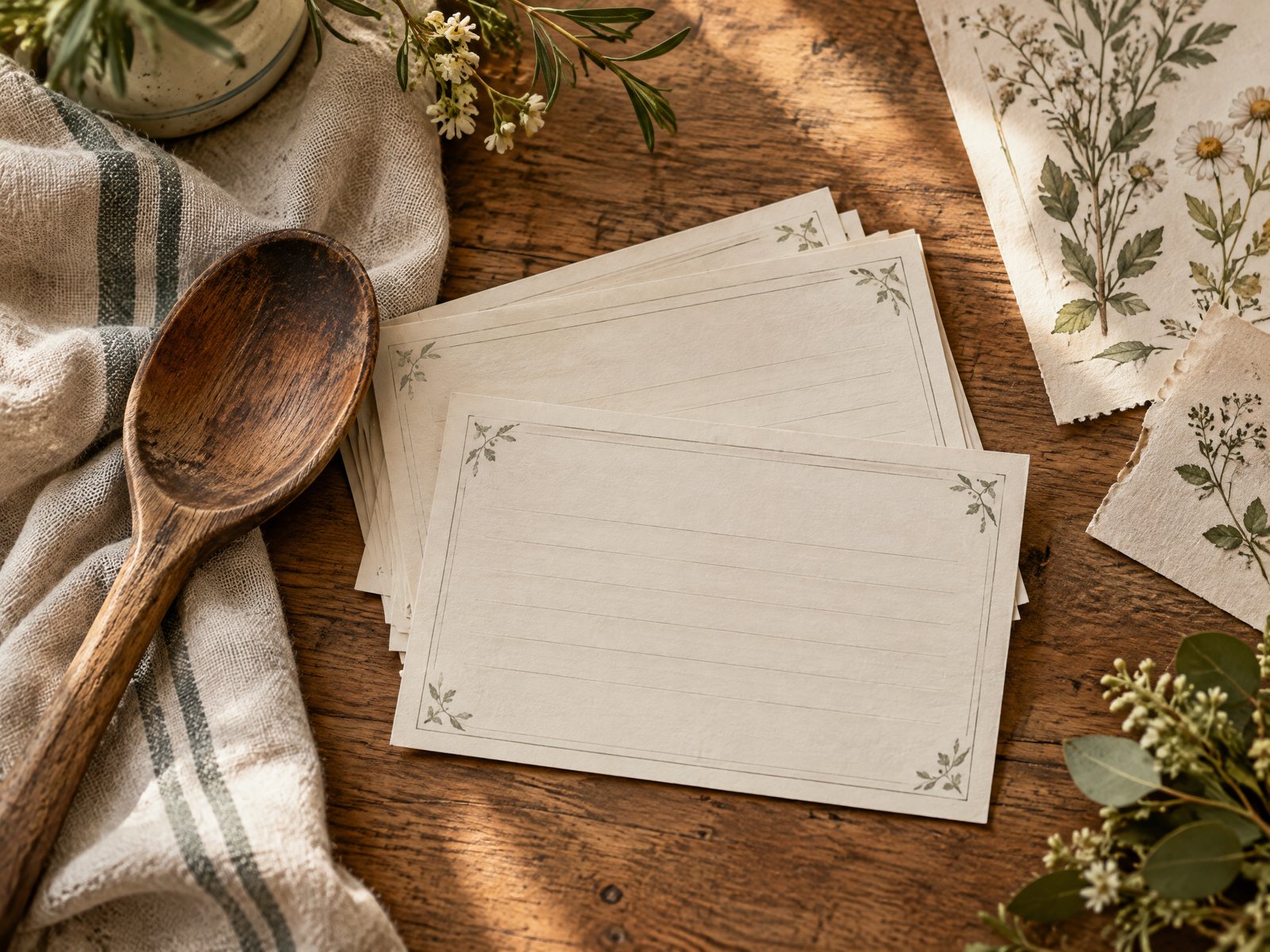
For a compact writing surface, Pastel Academia Note Cards are listed as 3 in x 5 in cards with a ruled side and a blank reverse. That format can support a short recipe on one side and memory prompts or an attribution note on the other. If your handwriting runs large, use the card for an index and keep longer material in a separate notebook rather than cramming every detail into a tiny space.
Build privacy into the collection from the first conversation
Recipe memories often contain more personal information than expected. A card may reveal a family disagreement, a former address written on an old note, a health-related dietary change, or a name that someone does not want circulated. Keep the handling plan clear.
Create three piles or labels: shareable, household, and ask first. Shareable might include a dish name and a general occasion. Household could include a relative’s preferred quantities or a story intended for close family. Ask first covers names, photographs of handwritten originals, recordings, and anything another person supplied. Keep the “ask first” material physically separate while you organize.
Attribution should be specific without becoming intrusive. “From Grandma” may be affectionate but ambiguous in a large family. If the contributor agrees, use a first name, relationship, or initials that distinguish the source. If they prefer no name, write “family version, contributor prefers privacy.” Do not publish or forward a card merely because someone handed you the recipe in conversation; possession is not the same as permission to distribute.
Decide where the master set lives. A small box, envelope, or labeled drawer is more practical than leaving loose cards on a kitchen counter. Keep a private index that identifies missing permissions, but do not write sensitive details on the outside of the container. If you photograph cards for backup, store those images with the same care as the originals and tell contributors who can access them.
For a more finished handoff to one relative, Reading Room Envelopes can serve as an outer presentation piece for a small set. Treat the envelope as packaging, not archival protection; the important privacy decision is who receives it and what they have agreed to keep or share. Farouk is a shop with an editorial selection, so check the individual listing for the current details of any item you consider.
Organize cards so the collection can change
Alphabetical order is familiar, but it is not always the best first system. A family archive can be organized by contributor, occasion, season, or confidence level. Choose one primary order and add a small code or index for the others. For example, “C-04” might identify a contributor group and recipe number, while a separate list records whether the card is confirmed or needs a follow-up.
A useful first pass is a four-step sequence. Capture the memory without trying to make the prose elegant. Confirm names, quantities, and permissions with the contributor. Copy a clean working card only after those checks. Review the set every few months for duplicate versions or unanswered questions. This keeps a nostalgic project from becoming a pile of nearly identical cards.
Versioning matters when a recipe has changed. Label cards “family version, 2014 recollection” and “current version, contributor check, 2026” rather than overwriting the earlier card. A substitution may reflect an unavailable ingredient, a new preference, or a different household—not an error. Add a short “what changed” note when the person is comfortable sharing it.
Use visual signals sparingly. A colored corner can mark “needs confirmation,” while a small symbol can identify a story-only card. Avoid so many stickers, tabs, or decorative marks that the status becomes hard to read. If you want a restrained paper accent, browse the Farouk note-card collection and choose one supporting style rather than mixing every motif in the catalog.
Here are three failure cases worth planning for:
1. The card becomes a transcription contest. Several relatives remember different quantities and insist theirs is the only version. Keep separate attributed versions and describe the disagreement neutrally. The archive can preserve variation without deciding who is right. 2. The memory is vivid but the recipe is unusable. Mark it “story recorded; method incomplete,” then list one or two questions for a future conversation. Do not invent measurements to make the card look finished. 3. The project expands until nobody wants to continue. Freeze the first set, label it “volume one,” and create a waiting list. A finished small collection is better than an ambitious stack that remains blank.
Share or store the finished set
When the cards are complete, decide whether the next step is a quiet exchange, a family reading session, or simply storage. A contributor might prefer to review a scan before receiving a copy. Someone else may want a card returned after you have taken notes. Let the owner set that boundary, especially when an old handwritten original is involved.
Place the cards in order, add an index card explaining the status labels, and write a short note about the project’s purpose. You might include a blank “future memory” card for an additional story, but do not pressure anyone to fill it in immediately.
If you need a plain writing companion for longer interviews or follow-up questions, Study Night Note Cards can work as a separate question stack rather than part of the permanent recipe set. Use one card for each conversation, date it, and transfer only the material that has permission to enter the archive. That separation helps distinguish raw notes from the version you are comfortable preserving.
Finally, keep the language modest. These cards can honor a person’s contribution, preserve a family vocabulary, and make a future conversation easier. They cannot prove the exact origin of a dish, settle every disagreement, or replace careful kitchen judgment. Their value is in showing what was remembered, who shared it, and what remains open to confirmation.
If you are unsure how to choose paper goods for the project, read about Farouk Book Store for the shop context, then confirm current listing details before preparing an order request. A carefully attributed set of five cards is already a meaningful beginning: small enough to finish, private enough to respect, and organized enough to keep growing when the family is ready.
Related reading: How to Write a Thank-You Note That Feels Personal, A Graduation Memory Envelope from the Farouk Edit, and Farouk-Inspired Home Library Recommendation Cards.