Graduation creates an awkward paper problem: there may be too many possible memories, but very little guidance about which ones are welcome to keep. A program, a photo, a scribbled joke, and a congratulatory note can quickly become a bulky pile—or a personal item collected without the graduate’s consent. Farouk Book Store offers a useful editorial starting point: treat the keepsake as a small, permission-based envelope of selected moments, not a generic graduation gift basket.
The goal is not to preserve every artifact from a school chapter. It is to choose a few pieces that explain what the graduate actually wants to remember, give each one a little context, and make the finished envelope easy to open later. The best version can be modest: three cards, one photograph, and a short note may say more than a stuffed box of ceremony leftovers.
Start with permission and a clear boundary
Before collecting anything, ask the graduate what kind of memory they would enjoy receiving. “Would you like me to make a small envelope of school memories for you?” is better than quietly taking items from a desk, backpack, or ceremony table. The answer may be yes with limits, yes but only for certain people to contribute, or no. All three answers are useful and should be respected.
Set the boundary in practical terms. Ask whether photographs are acceptable, whether names of classmates may appear, and whether the envelope should be opened now or saved for later. If a school document contains a student ID, address, phone number, grade details, or another private identifier, leave it out. A graduation keepsake does not need to become a record of sensitive information.
Permission also applies to contributors. If you invite a teacher, friend, or relative to add a note, explain the size and purpose of the project. A contributor can write one memory in their own words; they do not need to supply a public tribute, reproduce a school document, or disclose someone else’s story. You can make the invitation low-pressure: “If you would like to add one short memory, I’m collecting a few private keepsake cards for them.”
Decide who will see the finished envelope. A gift intended for the graduate alone can include a more candid note than one displayed at a party. If several people are contributing, tell them whether the contents will remain private. Clear expectations prevent an intimate project from becoming an accidental social-media prop.
Choose three to five memories with different jobs
A useful envelope has an editing principle. Instead of asking everyone for “anything from school,” assign each item a distinct job. This keeps the collection small and gives the graduate a reason to revisit every piece.
1. A beginning. Choose a small reminder of how the chapter started: an orientation card, a first-day anecdote written on a blank card, or a sentence from someone who remembers the graduate’s early uncertainty. Do not remove an original document if it belongs to the school or contains information the graduate may need elsewhere. A handwritten paraphrase is often safer and more personal.
2. A turning point. Ask for one moment when something changed: a project finally clicked, a club became meaningful, a difficult class was completed, or a new friendship formed. The prompt should request a specific scene rather than a broad compliment. “What is one ordinary afternoon you still remember?” will usually produce a more vivid card than “Write something inspiring.”
3. An ordinary favorite. Ceremonies are already represented by photographs and formal programs. Balance them with a small, everyday detail: a cafeteria ritual, a hallway conversation, a library seat, or the phrase a friend always used before a test. These moments make the envelope feel like a life, not just an achievement announcement.
4. A voice from the present. Add a note that describes the graduate as they are now, without predicting their entire future. A friend might mention a quality they witnessed; a sibling might name a habit they will miss. Keep it concrete and avoid pressure to be exceptionally successful, endlessly confident, or grateful on demand.
5. A blank future card. Leave one card empty or write a simple invitation such as “Open when you want to remember this season.” The graduate can add a future reflection when they choose. This protects the project from pretending that the meaning of graduation is finished on ceremony day.
Three items may suit someone private; five may work for a group contribution. More is not automatically more thoughtful. If every card repeats “Congratulations,” remove the duplicates and ask contributors to replace them with a particular memory, image, or line of dialogue they are comfortable sharing.
Match the paper to the memory, not the other way around
The Farouk catalog is an editorial selection, so use products as components for the project rather than treating a single design as the meaning of graduation. Start with the envelope’s practical role: it should hold the chosen cards without forcing folds or crowding. The envelopes collection is a sensible place to compare the available visual directions.
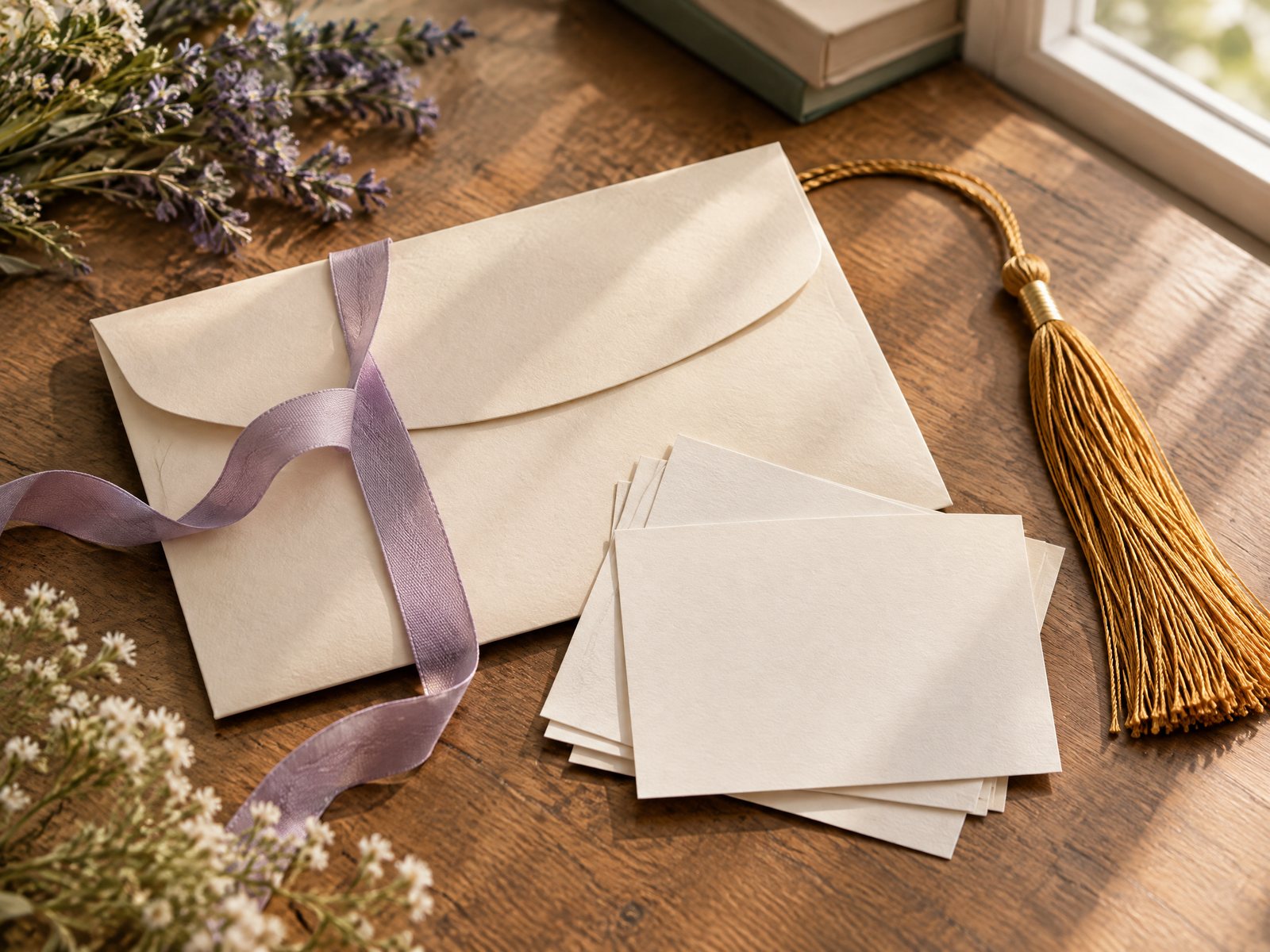
For a soft academic atmosphere, Pastel Academia Envelopes are listed as A7 envelopes, approximately 5.25 by 7.25 inches, in sets of 10. Their full-color exterior and interior can make opening the envelope feel like a small reveal. Because this project concerns one graduate rather than a large event, reserve the remaining envelopes for future notes or use them for a separate, clearly labeled batch. Do not imply that a paper pattern represents the graduate’s school or identity unless they say so.
If the recipient prefers a calmer reading-room mood, Reading Room Envelopes offer another direction within the same basic envelope concept. Choose by the graduate’s stated taste, not by assumptions about what a “serious student” should like. A quiet design can hold a lively collection of memories, and a colorful design can hold a very private one.
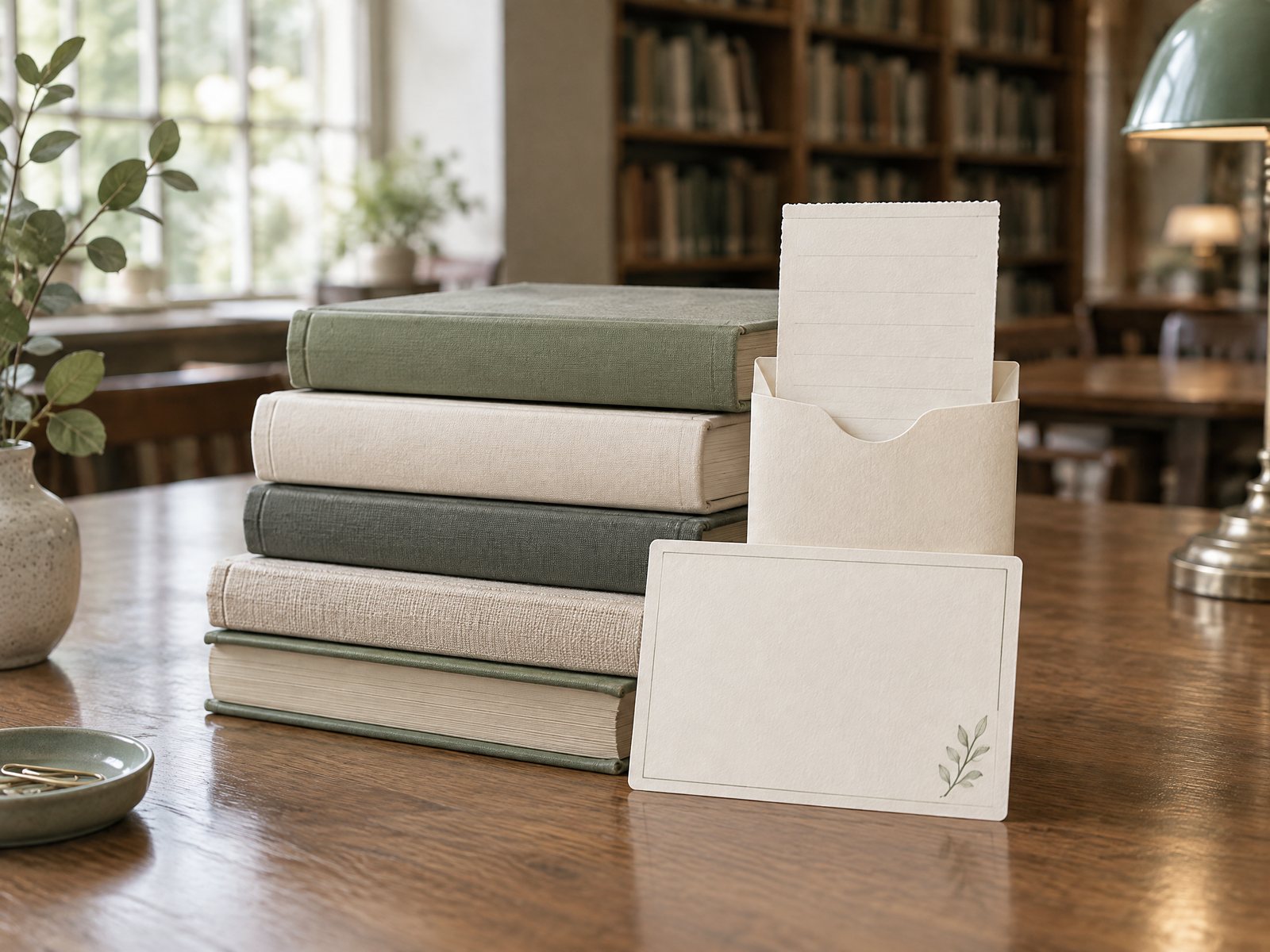
For the inserts, Pastel Academia Note Cards are listed as a bundle of 50 cards measuring 3 by 5 inches, with one ruled side and one blank side. That split is helpful when contributors need writing guidance but the graduate might later add a sketch, date, or small visual on the reverse. The Reading Room Note Cards provide a comparable 3-by-5-inch format with lined and blank sides. Select one card style for a coherent set, or deliberately use two styles only when the difference helps identify contributors.
Do not describe catalog items as custom graduation stationery, archival materials, or products tested for long-term storage. They are pieces in a shop’s selection. If a photograph or irreplaceable paper matters, place it in a separate protective sleeve or folder chosen for that object, rather than making a claim about the envelope’s preservation properties.
Assemble, label, and hand it over thoughtfully
Make a simple contents plan before writing. On a scrap sheet, list each item, its contributor, and the reason it belongs. This catches accidental duplication and helps you notice when one card includes a private detail that should be removed. Use pencil for your planning list, not on the keepsake itself.
Write the context on a separate small card or on the back only if the graduate would appreciate it. A useful label might say “First week,” “The library table,” or “A note from Maya,” provided the contributor has agreed to be named. Avoid labels such as “proof you succeeded” or “the best years of your life.” Those phrases turn a memory into a verdict and can make a complicated school experience feel flattened.
Handle original items conservatively. If the graduate wants the ceremony program included, ask them to provide it or to approve a copy. Do not take a classmate’s photograph and place it in the envelope without checking with the people pictured. When a memory involves a difficult period, let the graduate decide whether it belongs and whether the wording is accurate. A keepsake should not force a celebratory interpretation onto an experience they remember differently.
Do a physical test with blank stand-ins before inserting the final pieces. Place the cards inside, close the flap, and check whether corners bend or the envelope bulges. If it is crowded, reduce the number of inserts rather than forcing everything in. A one-page summary of a long message can be offered alongside the original, but do not destroy or trim an item just to make the arrangement work.
Give the envelope without a performance requirement. You can say, “These are a few memories people wanted you to have. You can open it now, later, or not at all.” That sentence is especially important at a party, where the recipient may not want to read private notes in front of an audience. If the envelope is being mailed or handed to someone you do not know well, confirm the preferred contact method and any practical details through Farouk Book Store’s contact page; the website’s bag prepares an email order request, so inventory, taxes, and shipping should be confirmed rather than assumed.
A graduation memory envelope succeeds when its limits are visible. It holds a few chosen moments, not an entire education; it reflects permission, not access; and it leaves room for the graduate’s own interpretation. Begin with one question, edit firmly, and let the paper support the memories instead of competing with them.
Related reading: Why Handwritten Greeting Cards Still Matter, How to Build a Personalized Gift Bundle, and Why Small Gifts Create Big Connections.