A guest can stand in front of a full bookshelf and still have no idea where to begin. The spines may be familiar to you, but a visitor cannot tell which novel is a gentle weekend read, which one needs concentration, or which title you would rather discuss privately. A small card beside a book can solve that hesitation without putting every reader on the spot. Farouk Book Store’s note-card selection offers a useful starting point for a simple, personal system: recommendations that provide context, protect spoilers, and leave the final choice with the guest.
This is not a reading log, a rating archive, or a way to catalogue every volume in the house. Think of it as a handful of invitations placed where browsing already happens. The best cards answer a guest’s immediate question—“Why might I choose this?”—in a sentence or two, then step aside.
Start with the guest’s choice, not your whole shelf
Begin by choosing a small shelf, basket, or single row rather than labelling an entire home library. Six to twelve books is enough for a first round. A tightly bounded selection is easier to refresh and less likely to make guests feel that they are being assigned homework. Include books with genuinely different entry points: a short novel, a collection of essays, a visually distinctive book, and one title that is easy to dip into. Do not choose only your personal favourites if that would make the display feel like a test of taste.
Before writing, decide what you are offering permission to do. A card might invite someone to read the first chapter, borrow the book, ask you about its subject, or simply put it back. That distinction matters in a shared home. A recommendation is not an obligation, and “please ask before borrowing” is a reasonable household boundary. If a title is sentimental, signed, fragile, or not available to lend, say so plainly on the card or use a browsing-only tray.
Ask yourself three practical questions for each book:
1. What is the useful context? Perhaps it is a fast-paced mystery, an imaginative world, a set of short reflections, or a book that rewards patience. 2. What should remain undisclosed? Keep twists, endings, reveal words, and diagnostic descriptions out of public view. 3. What choice should the guest have? They might browse the cover, read a sample, borrow it, or select another card.
A card that answers those questions is more welcoming than one that simply says “five stars.” Ratings compress a personal response into a verdict; context lets another person decide whether the book fits their moment.
Build a compact card format that is easy to scan
Use one card per book and keep the visible structure consistent. A useful front can contain the title, author, a short “try this if…” line, and a boundary such as “spoiler-free.” The reverse can hold a private note for household use: where the book belongs, whether it is lendable, and the date you last refreshed the recommendation. If several people share the shelves, leave room for initials or a second perspective rather than forcing everyone into one voice.
A three-part prompt keeps the writing specific:
- Try this if: you want a quiet, atmospheric story, a compact history, or a book that gives you something to debate.
- Expect: a broad description of pace, form, or subject—not a plot summary.
- Start here: a low-pressure action, such as reading the opening pages or looking at one chapter heading.
For example, a spoiler-safe card could say: “Try this if you enjoy observant characters and a slow change in perspective. Expect a reflective pace and a setting that rewards attention. Start with the opening chapter; you do not need to commit beyond that.” It gives a reader enough information without announcing what happens.
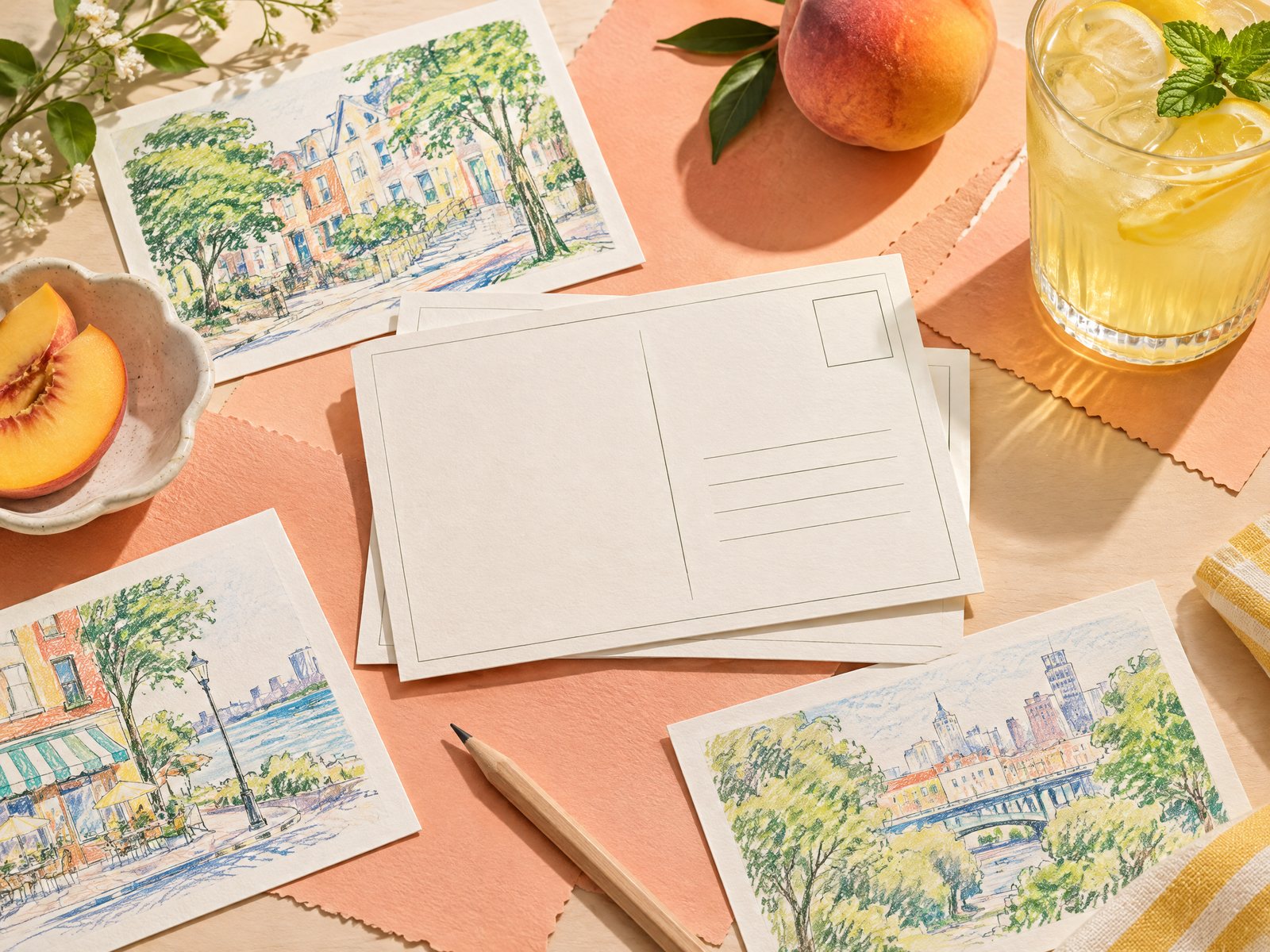
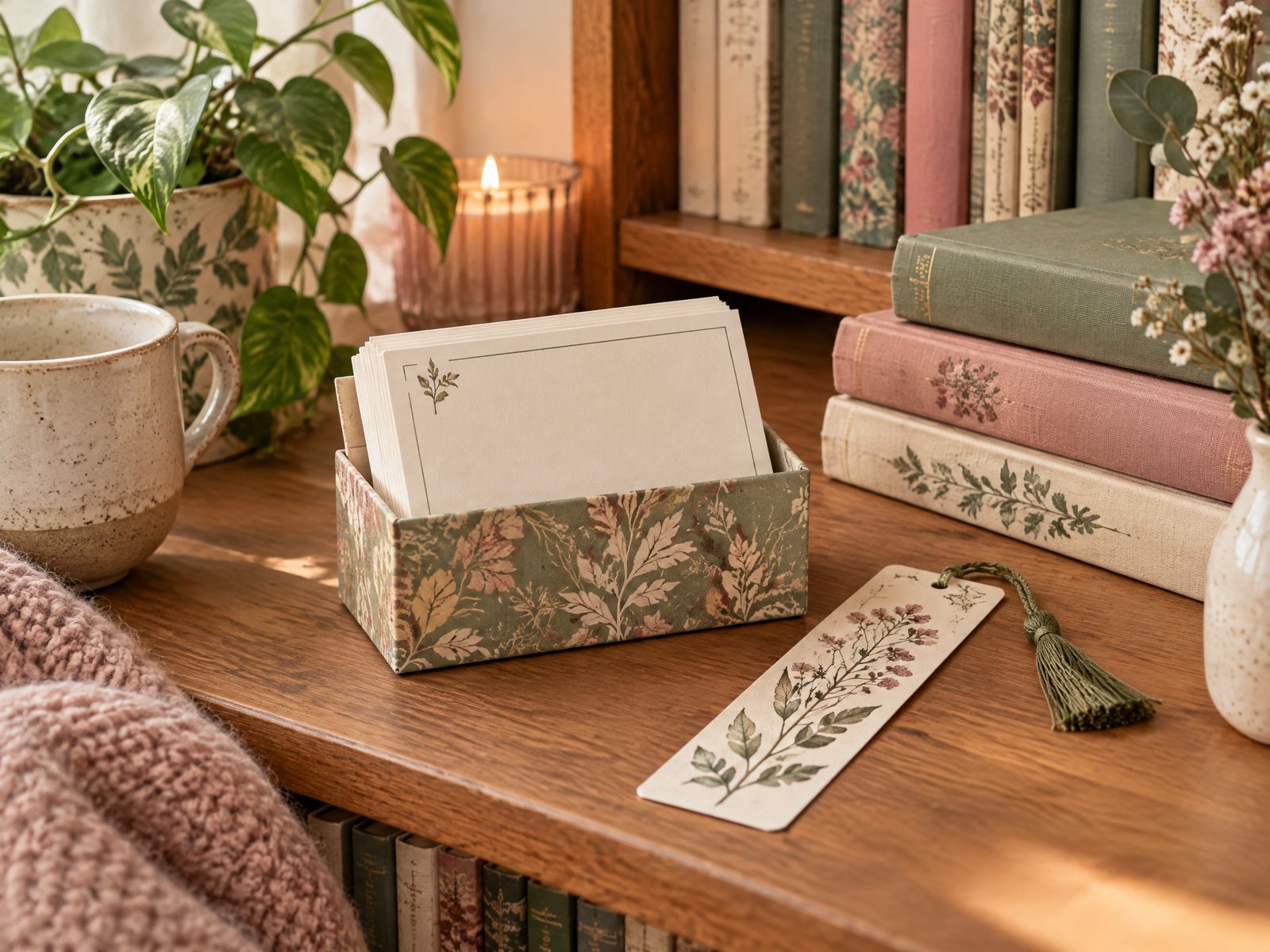
Keep the handwriting or typography large enough to read at arm’s length. A small, quiet design is often better than a decorated card that competes with the book jacket. If you want a coordinated paper edit, browse Farouk’s note cards collection. The catalog includes compact index-style options with a lined side for orderly prompts and an unlined side for a sketch, symbol, or extra note. Exact stock, appearance, and availability should be checked on the individual listing before you plan a set.
The Reading Room Note Cards are a natural fit for a shelf-facing system: their listing describes 3-by-5-inch cards, a lined side, and a blank reverse. You could reserve the lined face for the guest-facing recommendation and use the reverse for a lending boundary. If you prefer a more night-at-the-library mood, Study Night Note Cards use the same general index-card logic while leaving room for diagrams or freeform marks. These are actual catalog examples, not a claim that Farouk manufactures every design; Farouk is a shop with an editorial selection.
Handle spoilers, privacy, and borrowing clearly
Spoiler control is the difference between a useful recommendation and an accidental plot announcement. Describe reading experience rather than events. “Unreliable narration,” for example, may already reveal too much for some books; “a perspective that keeps you questioning what you notice” is usually safer. Avoid naming the final relationship, secret identity, death, discovery, or the point at which the story changes direction. If even the genre is sensitive, write a broad invitation such as “Ask me for a spoiler-free description.”
A two-level system works well when your household has mixed preferences. The public card stays deliberately general. A small mark—such as “ask for more”—signals that the owner can give a fuller description in conversation. Never write private details about a guest’s reading history, health, family situation, or assumed identity on a card visible to others. A recommendation should describe the book, not label the person who might read it.
Borrowing information deserves its own line. “Browse here; ask before taking” is clearer than a vague decorative symbol. For lendable books, note a simple action such as “Please tell me if you borrow this so I can remember where it went.” That is a courtesy, not surveillance. If a title is part of a series, identify the reading order without revealing what happens: “Book one in a sequence; check with me if you want the best starting point.”
Watch for common failure cases. A card that says “perfect for anyone” makes a broad promise and gives no decision help. A card that reproduces a review blurb can sound impersonal and may contain spoilers you did not notice. A card covered in genre labels can make one book feel like a category exercise. And a card that says “you’ll love this” turns a recommendation into pressure. Replace these with observable, modest language: pace, format, atmosphere, subject, or the kind of attention the book asks for.
Test the system, then refresh it lightly
Put the first cards out for a week and observe where guests pause—not to judge their choices, but to find friction. Do they ask what “reflective” means? Add one concrete clue. Do they overlook a card because the text is too small? Rewrite it larger. Do people pick up a book that is not available to lend? Move the boundary to the first line. If nobody uses a card, the answer may be its placement rather than its wording; set it beside the book’s fore-edge or in a small holder rather than hiding it behind the spine.
Use different card treatments for different kinds of shelves. A family room may need short, friendly prompts that can be understood in seconds. A personal office can support longer notes about form, translation, or historical context. For a children’s shelf, keep the wording age-appropriate and let a responsible adult handle borrowing boundaries; do not infer a child’s interests from a single choice.
A third catalog option, Starry Clouds Note Cards, can work when you want the reverse side to become a small visual index: draw a moon for a nighttime setting, a line for a book that moves quickly, or a simple dot for a short read. Keep the symbols explained in a card holder so visitors are not forced to decode a private system. If you want a non-card visual cue, the Stacked Books bookmark can mark the current “start here” title without attaching anything to the book itself. It is a separate bookmark, not a substitute for a written recommendation.
Refresh cards when your relationship to a book changes, when a title moves shelves, or when a guest asks a question the card cannot answer. You do not need to update every card on a schedule. A pencil note on the reverse—“rewrite after next lending”—is enough. Keep a few blank cards nearby, but do not let the system expand until every shelf has signage. Its value comes from selectivity: a guest sees a manageable set of possibilities, understands the boundaries, and can choose without performing appreciation for the owner.
Finally, make the invitation explicit. A small line such as “Tell me what kind of read you want today, or choose without explaining” gives people room to participate—or simply browse. That is the heart of a home-library recommendation-card system: not proving that your collection is impressive, but making one good next book easier to find.
If you need to clarify a listing before planning your paper set, use Farouk Book Store’s contact page; availability and order details should be confirmed rather than assumed.
Related reading: How to Start a Reading Journal You Will Actually Use, Reading Journal Prompts Beyond Ratings and Summaries, and How to Use Reading Log Bookmarks to Track Your Books.