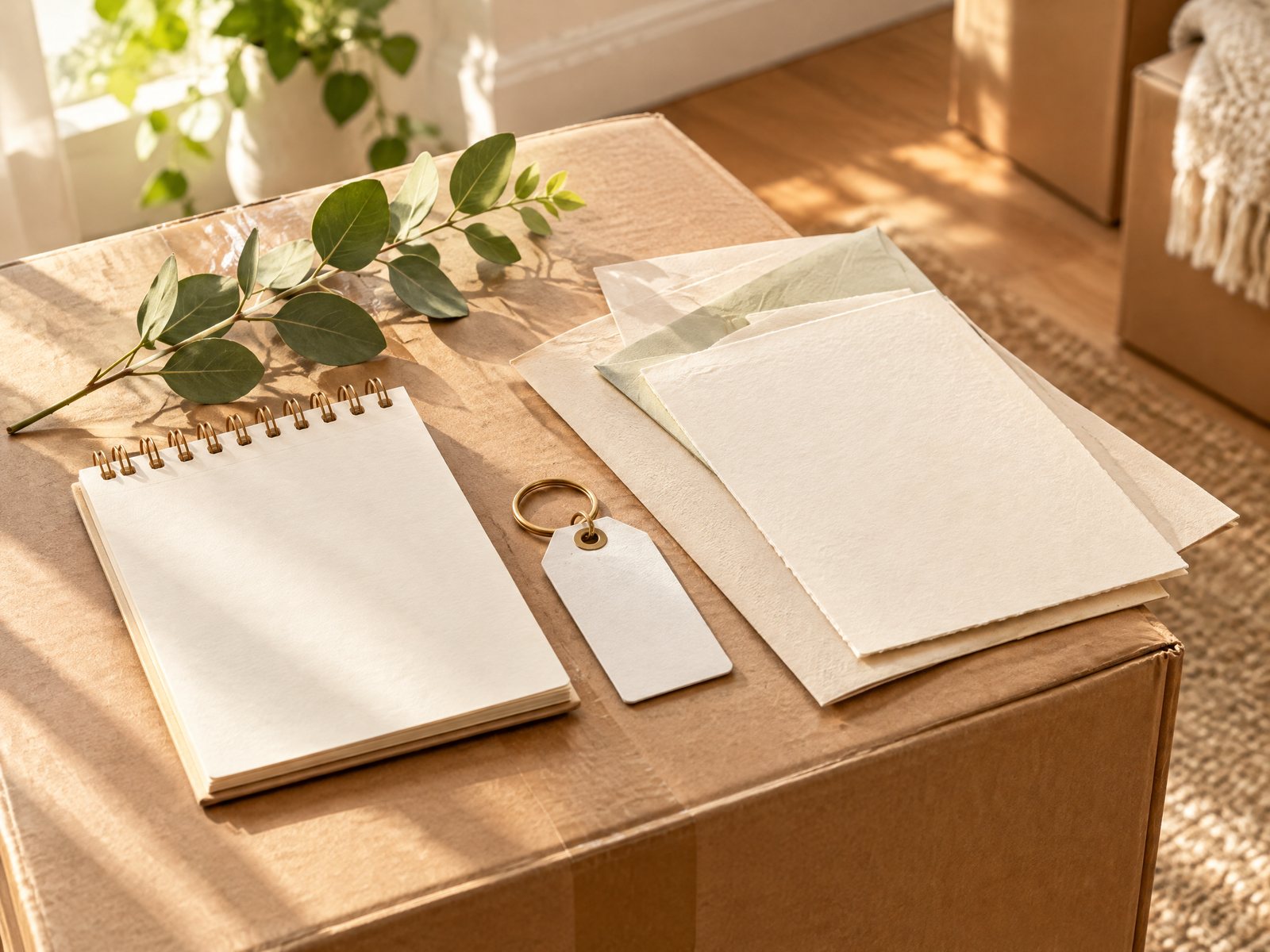
A professional event can produce dozens of introductions and almost no reliable way to remember which conversation mattered. A conference note exchange gives two people a small, deliberate way to continue a useful idea without turning a friendly interaction into a sales lead. Farouk Book Store offers an editorial selection of paper goods that can support this kind of gesture; the important part is the agreement around the note, not the novelty of the stationery.
This is not a business-card replacement, a prospecting system, or a promise that every contact should become a relationship. It is a voluntary exchange between people who have already found a shared question, reading suggestion, creative idea, or practical resource worth returning to. Keep the invitation easy to decline, the content modest, and the follow-up specific enough that neither person is left guessing.
Decide what the exchange is—and what it is not
Before packing paper, choose one purpose. “Let’s exchange one takeaway from this session” is workable. “Let’s stay in touch” is too broad unless you already know what that means. A purpose creates a natural stopping point and protects both people from an open-ended obligation.
Useful purposes include:
- a sentence about an idea that changed how you see a shared topic;
- a question you did not have time to ask during a panel;
- a book, article, tool, or public resource you genuinely recommend;
- a small sketch of a process, layout, or concept discussed in conversation; or
- a reminder of the exact session or discussion you both want to revisit.
Avoid collecting private details simply because a note has space. A person may want to share a professional email address, a public profile, or no contact information at all. Do not write down a phone number, employer detail, travel plan, or personal story unless the person offers it and understands why you are recording it. A note can preserve an idea without becoming a dossier.
Use an invitation that gives the other person control: “Would you like to exchange a short takeaway? No pressure—just one card each.” If they hesitate, change the subject without asking for a reason. If they agree, confirm the format before writing: “A recommendation, a question, or a summary of our conversation?” That tiny choice prevents mismatched expectations.
For a compact starting point, browse the note cards collection and choose a format that leaves room for one thought rather than encouraging an essay. Farouk’s catalog is an editorial selection, so treat any product as a paper option to assess against your event and your recipient—not as a claim that every design is made by Farouk.
Build a small, event-ready paper kit
A good kit is light enough to carry, visible enough to remember, and limited enough to keep the exchange from becoming an administrative project. Pack ten to fifteen cards, one writing instrument that behaves consistently, and a slim place to separate unused cards from completed exchanges. If you are attending a full-day event, add a few blank slips for your own session notes, but keep those separate from cards intended for another person.
A useful choice is Study Night Note Cards. The catalog describes a 3 x 5 inch format with one ruled side and one blank side, in a bundle of 50 cards. That gives you a practical division: write a concise message on the ruled side and use the reverse for a simple diagram or a second question. The compact size also imposes a helpful limit. You are less likely to copy a whole presentation or turn a short exchange into a report.
If you want a softer visual cue while retaining that same compact structure, Pastel Academia Note Cards are also listed as 3 x 5 inch cards with a ruled side and a blank side. Select one card style for the entire exchange if you want the activity to feel coherent. Select two only when the distinction has a purpose—for example, one style for “question to revisit” and another for “resource to explore.” Do not make different designs imply different levels of professional importance.
The card itself is not the follow-up channel. If someone wants an email, ask them to write it themselves or offer your own contact information for them to use later. If they prefer a public profile, let them choose which one. When a note contains a link, write the short, exact address or a clear search phrase; do not assume a QR code is welcome, and do not photograph the card without permission.
Use a repeatable exchange without making it transactional
At the event, wait for a real point of connection: a shared problem, a surprising example, or a recommendation that fits the other person’s stated interest. Then offer the exchange after the conversation has earned it. Keep the spoken script simple:
> “I wrote one question from our conversation. Would you like to trade notes, or would you rather just take the question?”
That wording offers three outcomes: exchange, one-way handoff, or no paper at all. It also avoids suggesting that the note has commercial value. If the other person says yes, agree on a maximum—one card, three minutes, or one idea—before writing.
A practical card structure is context, contribution, next choice:
1. Context: Name the session, topic, or conversation in a few words so the card makes sense later. 2. Contribution: Add one original observation, question, recommendation, or sketch. Paraphrase rather than copying a speaker’s wording or reproducing protected material. 3. Next choice: Write “reply if useful,” “no response needed,” or a specific optional action such as “I’d be interested in your reading recommendation.”
Examples make the boundaries visible. After a workshop on community archives, a useful note might say: “Tuesday session — your point about labeling assumptions stayed with me. I’m going to compare two archive descriptions this week. If you have a public example to recommend, feel free to send it; no reply needed.” After meeting someone interested in visual research, a note might say: “Our conversation about color as a navigation cue made me rethink my sketchbook index. I drew the three-step version on the back. Happy to share thoughts later if you want.” Neither note promises a meeting, asks for confidential information, or disguises a pitch.
A poor exchange looks different: a card covered with copied quotations, a request for an introduction to a senior person, an invitation to schedule a sales call, or a demand for a reply by a certain date. If your message would feel awkward when read aloud to the surrounding table, shorten it or leave it unwritten.
Protect privacy during and after the event
Conference spaces are public, even when a conversation feels personal. Write with the assumption that a card could be misplaced. Use first names only if that is enough. Do not include room numbers, hotel details, flight plans, family information, or sensitive work notes. If the subject itself is confidential, keep the card at the level of a broad question and continue through an approved private channel only if the other person initiates that move.
Ask before adding anyone to a mailing list, group chat, shared document, or professional network. An exchanged note is not consent for marketing. It is also not permission to post a photograph, quote the message, identify the writer, or describe the exchange online. If you are representing an organization, follow its event, data, and contact rules rather than improvising a personal system.
Plan a short retention rule before you leave. You might keep exchanged cards in a labeled envelope until you have reviewed them once, then recycle anything with no clear next step. For a card that includes contact details, decide whether you need to transfer the information to your own address book, ask permission first, or return the card. Do not preserve every piece of paper merely because it came from a memorable day.
For a finished handoff, Reading Room Envelopes are listed as A7 envelopes, approximately 5.25 x 7.25 inches, in sets of 10. They may suit a planned exchange where both people want a more deliberate mailed follow-up, but an envelope can also make a casual interaction feel weightier than intended. Use one only after confirming that mailing is welcome and that you have the correct address. If you are handing over a card at the venue, a plain sleeve or no envelope may be more proportionate.
Follow up with restraint and a clear stop
Within a few days, review each card and sort it into three piles: act, reference, and release. “Act” means you agreed to send one resource or answer one question. “Reference” means the idea is useful but no response is expected. “Release” means the exchange was pleasant but does not need to continue. This prevents the familiar failure where a good conversation becomes a backlog of vague promises.
For an act card, send one concise message that names the event and does exactly what you offered. “It was good to meet at the afternoon session. Here is the public report I mentioned. No need to reply.” If you promised a recommendation, send one recommendation, not a bundle of links. If you cannot follow through, a brief correction is kinder than an indefinite silence: “I’m not able to locate the resource I mentioned, so please disregard that part of my note.”
For a reference card, you can simply keep the idea in your own notes. The other person does not need a thank-you email for accepting a no-pressure exchange. For a release card, do not invent a reason to reconnect. A thoughtful note is allowed to be complete at the event.
A few practical adjustments help when the first attempt goes wrong. If handwriting is hard to read, print fewer words and add a verbal explanation. If cards disappear in a crowded bag, use a dated pocket and record only a neutral first name plus the topic, with permission. If the activity starts attracting a queue, pause it rather than rushing people through. If someone treats the exchange like a lead list, restate the boundary: “I’m keeping this to one idea and no automatic follow-up.”
Farouk can be a starting point for selecting the paper, but the quality of the exchange comes from consent, specificity, and restraint. For questions about the shop or the available selection, use the about page or contact page; confirm current availability and order details rather than assuming that a particular format will remain in stock.
Related reading: How to Use Sticky Notes for Weekly Planning, Stationery Gifts for Coworkers with Different Work Styles, and How to Write a Thank-You Note That Feels Personal.