If you want to start a reading journal, begin with a system that is easy to return to—not a perfect spread that takes longer to decorate than to read. A useful journal might hold a few lines about a novel, a list of books to try, or a question you want to remember. It does not need elaborate lettering, a monthly dashboard, or a review of every book.
The best format is the one that matches your reading life. A frequent reader may enjoy a page per book, while someone with an unpredictable schedule may prefer brief entries whenever an idea catches their attention. This guide shows how to choose a practical notebook, make a small starting template, take notes without interrupting reading, and recover when the habit goes quiet.
Choose a format that removes friction
Before buying supplies or designing pages, decide what you want the journal to do. Finish this sentence: “I want a reading journal so I can…” Possible answers include remembering what I read, noticing patterns in my taste, keeping track of recommendations, or discussing books more thoughtfully. Pick one main purpose and one optional purpose. Too many goals make every entry feel like homework.
Next, choose the physical format around your actual habits:
- One notebook for everything: Best if you want book notes, wish lists, quotes, and reading plans in one place. Leave a few pages at the front for an index, then use the next blank page instead of trying to predict how much space each title will need.
- A page-per-book format: Best for readers who like a clear beginning and end. Reserve a double-page spread for each book, but allow shorter books or rereads to share a spread when necessary.
- A running log: Best for low-maintenance tracking. Give each entry a date, title, author, and a few lines. This is a good choice if you often stop and start books.
- Loose cards or inserts: Best if you like rearranging lists or carrying a few prompts separately. Keep completed cards in an envelope or folder so they do not become scattered.
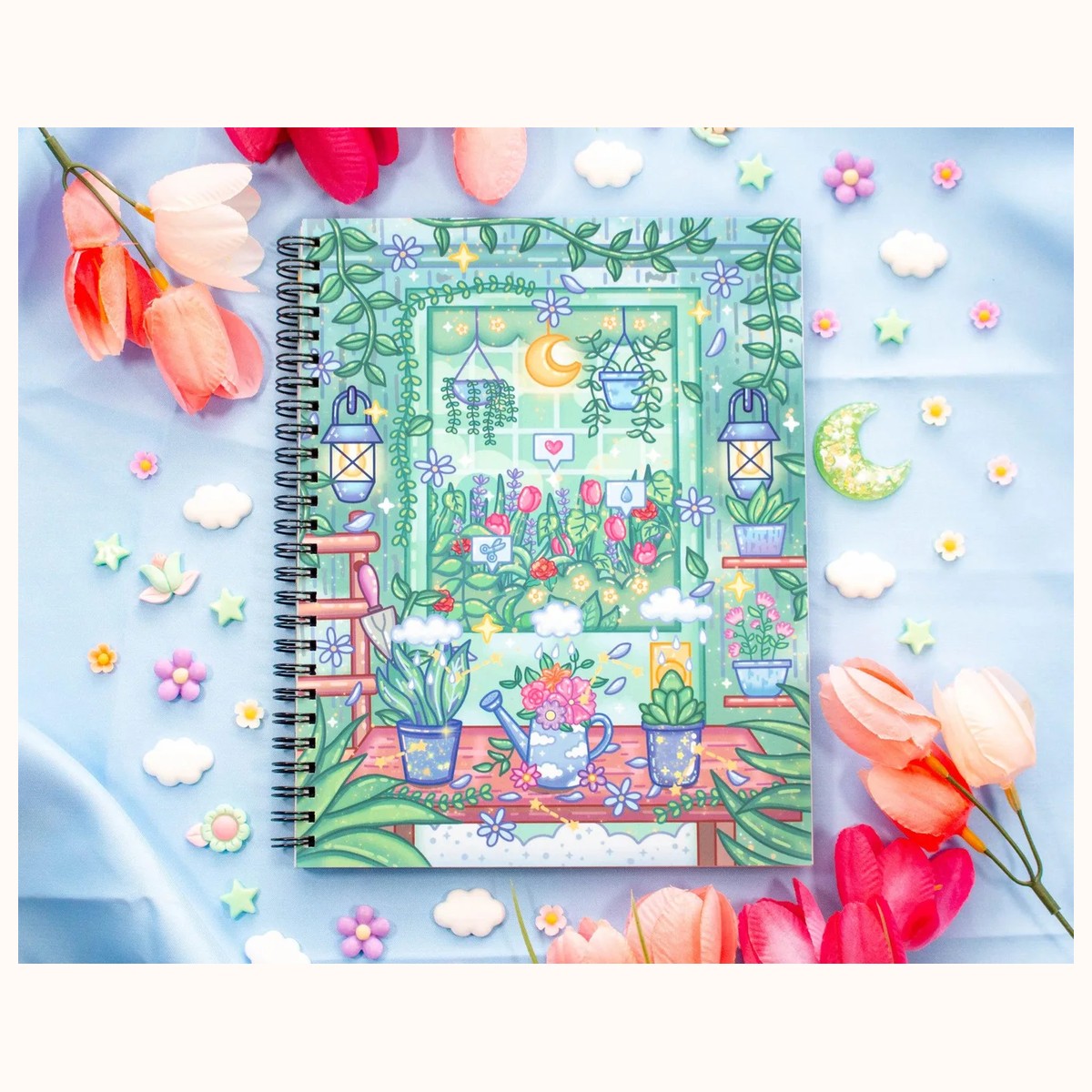
A practical notebook should open comfortably, offer enough room for your usual handwriting, and be easy to keep near your reading spot. The journals and notebooks collection is a sensible place to compare available formats. One relevant example is the Botanical Bliss Spiral Lined Notebook (7x9"). Its lined pages suit straightforward notes and lists, while the spiral binding can make writing across a spread more comfortable. Treat those features as options, not requirements: if a smaller pad is what you will carry, portability matters more than having a large page.
Make the first decision deliberately: Will you write while reading, immediately after, or once a week? If you read in bed, a simple running log may be easier than a decorated spread. If you attend a book club, a two-page review completed after each book may serve you better. The journal should fit the moment when you are most likely to use it.
Build a small entry template
A repeatable template prevents the blank page from making decisions for you. Start with four fields and use them for your first three entries:
1. Book and context: Record the title, author, date started or finished, and why you picked it up. “Borrowed after a friend mentioned it” is enough. 2. Response: Write one honest sentence about your experience. Try “I kept thinking about…” or “The pace worked for me because…” rather than forcing a rating. 3. Evidence: Note a scene, image, argument, character choice, or detail that supports your response. Summarize it in your own words if you do not want to copy a passage. 4. Next step: Decide whether you would recommend it, revisit it, look for another book by the author, or simply move on.
Here is a compact example:
> The Left-Handed Bookseller of London — Garth Nix > Started: 12 October | Finished: 17 October > I enjoyed the fast movement between ordinary London and the strange bookseller world. The shifting rules kept me curious, though I wanted more time with one supporting character. Next: look for another inventive fantasy with a similarly quick pace.
This entry is useful because it captures a reaction, a reason, and a possible future action without pretending to be a formal review. Your own categories can be more personal: “mood,” “best setting,” “question,” “favorite relationship,” or “what I learned.” Avoid adding a field just because it looks impressive. If you skip it three times, remove it.
For books you abandon, use the same structure with a different final question: What made me stop? Record the page or chapter if helpful, but do not treat an unfinished book as a failure. “Too slow for this month” is valuable information about timing and taste. If you return later, add a new dated note rather than erasing the earlier reaction.
Capture notes without interrupting reading
A reading journal should support attention, not compete with the book. Keep a bookmark, pencil, or a few removable notes nearby and mark only moments you genuinely want to revisit. You might use a single symbol system:
- `!` for a surprising idea or turn
- `?` for a question or unclear point
- `*` for a detail you want to remember
- `R` for a recommendation to investigate later
At the end of a chapter, transfer only the marks that still matter. This two-step approach keeps you from stopping every few pages to write a polished paragraph. If marking the book is not comfortable, jot a page number and three words on a separate note instead.
Use specific prompts when your notes become vague. Ask: What changed? What did the author make me notice? Which choice would I have made differently? What does the setting enable? Where did my attention drift? For nonfiction, add “What claim will I test or use?” For fiction, add “What does this character want, and what is in the way?” For poetry or essays, record an image, rhythm, or idea that you want to carry into another reading.
Small stationery additions can help when they solve a real problem. The Starry Clouds Note Cards can hold portable prompts, a temporary “to read” list, or discussion questions before you copy only the useful ones into your main notebook. A removable Paper Planes and Boats Washi Tape can mark a section divider if visual navigation helps you; it is not necessary to decorate every page. If you use stickers, reserve them for meaning—one icon for rereads, another for book-club picks—so the page stays readable.
Be careful with quotations. A short phrase may jog your memory, but a journal is usually stronger when it records your interpretation and the location of the passage rather than becoming a transcript. For a borrowed book, note the page while you have it; for an e-book, record the chapter or location shown by your reader. If you are unsure how much quoted text is appropriate for a public post, keep the journal private or ask for guidance through the store’s contact page.
Keep the habit flexible when life changes
Consistency does not mean writing on a rigid schedule. Set a minimum version that takes two minutes: title, one reaction, and a next step. Set an expanded version for days when you have more energy. You can use the minimum after a late-night reading session and return to the expanded prompts on the weekend.
Try a weekly reset that takes ten minutes:
1. Review the last few pages without correcting them. 2. Add missing titles or finish dates while they are still easy to remember. 3. Move only actionable recommendations to a “next reads” list. 4. Choose one question to carry into your next book. 5. Put the journal where your book, bookmark, or reading device already rests.
Troubleshooting is part of the system. If you forget entries, keep a temporary note on your phone or a card inside the current book and transfer it once a week. If every page looks unfinished, switch to a running log and stop reserving equal space for every title. If you dislike ratings, replace stars with words such as “absorbing,” “uneven,” “thought-provoking,” or “not for me.” If decoration consumes your reading time, set a five-minute limit or use one consistent color. If you feel pressure to finish books before writing, allow mid-book entries marked with a date; changing your mind is part of reading.
Review the journal monthly, but look for patterns rather than scores. Are you repeatedly choosing books with settings you love? Do you abandon books when the pacing slows? Are recommendations piling up faster than you can read them? Use those observations to make one adjustment, such as borrowing fewer books at once, alternating demanding and light reads, or keeping a separate list for “interesting someday” titles.
Finally, let the journal change with you. A reading season devoted to novels may need different prompts from one devoted to essays, study, or rereading favorites. Start with a notebook, a pen, and a three-line entry. After a month, keep what helps, remove what delays you, and let the record become evidence of how you read—not another project you have to perform.
Related reading: How to Choose Stickers for Journals and Planners · 2026 Stationery Trends: Color, Texture, and Joy · How to Build a Personalized Gift Bundle