The choice between a notepad and a notebook seems simple until you are standing at a desk with a shopping list, a meeting idea, or a half-formed sketch. In the notepad vs notebook decision, the best option is not automatically the one with more pages. It is the format that makes your next note easy to start, easy to find, and easy to use again.
A notepad usually gives you loose or tear-away sheets for short-lived information. A notebook keeps pages together for an ongoing record. That difference affects portability, privacy, organisation, and how much commitment a blank page seems to demand. Use the guide below to choose by task rather than by habit.
Start with the job your writing must do
Ask one practical question first: Will this note still matter after the task is finished? If the answer is “probably not,” a notepad is often the more efficient choice. It works well for a phone message, a grocery list, a quick calculation, a delivery instruction, or a reminder you will transfer to a calendar later. You can write, act, recycle, or file the sheet without carrying an entire record.
A notebook is better when the value is in the sequence. Class notes, project planning, reading observations, daily reflections, and recurring work instructions become more useful when related pages remain together. A bound volume also provides a visible place to return to, so you are less likely to lose the context around an idea.
A quick decision test
Choose a notepad when you need to:
- Capture a thought in seconds while keeping the desk clear.
- Hand someone a message, checklist, or short instruction.
- Separate temporary tasks from information worth archiving.
- Place a small note beside a monitor, keyboard, or telephone.
Choose a notebook when you need to:
- Build a chronological record, such as a study log or project diary.
- Refer back to earlier decisions, sketches, questions, or sources.
- Keep several related notes in one portable object.
- Create a dependable home for a routine such as morning planning.
The boundary is not strict. A notepad can become a valuable idea bank, and a notebook can hold disposable lists. The point is to decide whether pages should be removed and released or kept and connected.
Compare layout, size, and portability
Once the purpose is clear, look at the physical format. A compact sticky note pad is useful when the note must stay visible. For example, the Beach Cute Aesthetic Sticky Note is a 3-by-3-inch pad with 50 adhesive sheets. That scale suits a single reminder, a short task, or a page marker; it is not the right tool for a full meeting transcript. Because the sheet sticks to paper and other smooth surfaces, it can follow a planner page or sit beside a screen until the task is done.
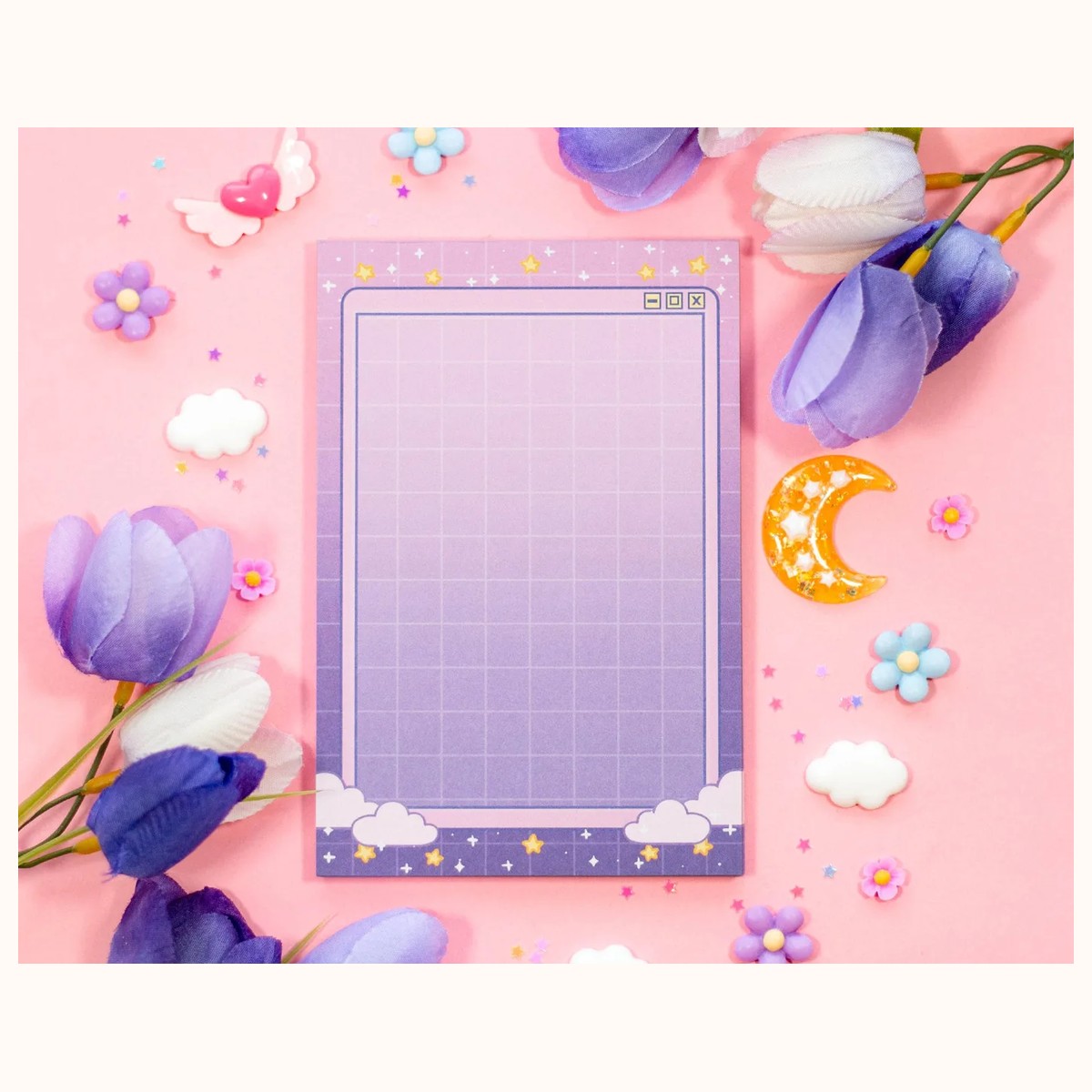
A non-adhesive memo pad behaves differently. The Purple Gradient Clouds Aesthetic Message Memo Notepad measures 4 by 6 inches and contains 50 sheets. Its pages are loose memo paper rather than sticky notes, so it gives you more room for a message, a small list, or a rough sketch without committing that information to a book. Keep a clip or envelope nearby if you need to collect pages instead of letting them scatter.
Size should follow the writing surface you normally have. A small pad fits a pencil case, kitchen drawer, or bedside table, but it becomes frustrating when a single task needs several sheets. A larger notepad gives you room to group items, yet it may be awkward on a crowded café table or in a small bag. A notebook is usually easier to carry as one object, but its cover and binding take space even when most pages are unused.
Try this three-location check before buying:
1. Work surface: Can you write comfortably without balancing the pad on your hand? 2. Storage spot: Will it fit the pocket, drawer, or shelf where you will actually keep it? 3. Carry route: Can it travel with your usual bag without bending pages or adding annoying bulk?
If a note needs to be seen by several people, loose sheets may be easier to post or pass around. If notes need to survive a commute and remain in order, a notebook usually reduces loose-page loss. For a portable middle ground, 3-by-5 note cards can be filed or rearranged; Starry Clouds Note Cards include lined and unlined sides for lists, flashcards, and quick diagrams.
Match the page style to how you think
Page layout can either remove friction or create it. Plain paper is flexible for diagrams, mind maps, lettering, and mixed notes, but it offers no visual guide for keeping a list aligned. Ruled pages help with sentences and meeting notes, while checklist layouts make the next action obvious. Sticky notes are especially helpful when the note is a prompt rather than a permanent record: write one action, place it where the action happens, and remove it when complete.
For a short task list, a checklist sticky note can be more useful than a blank notebook page. The Straight-a-student Check List Cute Aesthetic Sticky Notes has a 3-by-3-inch checklist-style sheet and 50 adhesive pages. Use one for “today,” one for a study session, or one for errands. If the list grows beyond the available lines, that is a signal to move the project into a notebook, planner, or larger sheet rather than writing smaller and harder to read.
A notebook wins when your thinking changes as you write. You can leave a page for an unfinished question, add a follow-up underneath it later, and refer to the previous entry without searching across a desk. This makes notebooks practical for:
- A weekly project where each session builds on the last.
- Reading notes that need page references and quotations.
- Lessons where diagrams and explanations belong together.
- Personal planning that benefits from seeing earlier patterns.
Prevent the “wrong format” problem
If your notebook feels too permanent, reserve the first few pages for an index and use a forgiving rule: imperfect notes are allowed. If your notepad produces piles of forgotten scraps, add a daily sorting step. Mark each sheet act, keep, or discard. Transfer action items to a calendar or task list, file reference notes, and remove the rest. This simple routine preserves the speed of a notepad without allowing temporary paper to become permanent clutter.
If ink visibility matters, test the actual pen you use on a spare page or an inconspicuous corner. Broad markers may show through some papers, and a wet ink can take longer to dry. Do not assume that a heavier-looking sheet solves every writing problem; choose the page and pen combination that matches your hand, speed, and tolerance for smudges.
Build an everyday setup that uses both
The most useful answer to notepad vs notebook may be both, with separate roles. Keep a small notepad or sticky pad in the place where interruptions happen: beside the phone, at the kitchen counter, or next to your laptop. Keep a notebook where you review and develop information: in a work bag, study area, or bedside drawer.
Use a simple handoff system so the two formats support each other:
1. Capture the thought immediately on the notepad. 2. At a set time, decide whether it is an action, reference, idea, or discard. 3. Move anything that needs context into the notebook, calendar, or digital task list. 4. Date longer notes and add a short heading so you can find them later.
For example, write “ask supplier about revised quantity” on a sticky note during a call. Before leaving work, transfer the action and deadline to your project notebook or task system. The sticky note has done its job; keeping it attached for weeks only creates visual noise.
You can browse Farouk Book Store’s notepads collection to compare compact sticky pads and loose memo formats. For questions about a product’s current details, use the contact page or check the product listing before ordering. That is especially sensible when dimensions, sheet count, or adhesive behavior will determine whether a format fits your routine.
Final choice in one sentence
Choose a notepad when speed, visibility, and easy separation matter most; choose a notebook when continuity, privacy, and future reference matter most. If your day contains both fleeting reminders and developing ideas, assign each format one clear job and review the loose pages regularly.
Related reading: How to Choose Stickers for Journals and Planners · Why Handwritten Greeting Cards Still Matter · 2026 Stationery Trends: Color, Texture, and Joy