A poetry evening can lose its warmth before the first poem begins: one guest is unsure what to bring, another dislikes reading aloud, and a well-meaning host fills the table with prompts that feel like homework. Farouk Book Store offers a useful starting point for a gentler format: a small set of paper cards that gives the gathering shape without deciding how anyone must participate. The goal is not to produce a literary performance. It is to make room for attention, curiosity, and a few good pauses.
The most important design choice is to write your own prompts rather than copy lines from a published poem. Original cards keep the evening focused on response and conversation, while respecting the work guests may bring. With a limited deck, clear opt-out language, and a simple sequence, a living room, library corner, or dining table can become a welcoming poetry space for readers with very different levels of confidence.
Start with the evening’s promise
Before choosing paper, decide what you are promising guests. “We will read poems together” can mean a formal reading, a discussion group, a writing workshop, or a quiet hour with optional sharing. Those are different events. For a friendly first gathering, a useful promise might be: *Bring one poem you like, or simply come ready to listen. Reading aloud is always optional.* Put that sentence in the invitation and repeat it when people arrive.
Keep the group small enough that nobody has to compete for time. Six to eight people is a workable planning range, but the right number depends on the room and the relationships involved. If guests are strangers, plan more structure and shorter turns. If they already know one another, leave more room for informal conversation. Ask in advance whether anyone needs a large-print card, a quieter seat, or permission to participate without sharing personal writing. Those are hosting choices, not assumptions about what poetry should do for someone.
A prompt deck should support the promise, not replace it. Prepare three kinds of cards:
- Arrival cards help people notice a poem without demanding interpretation. Examples include “What image stayed with you after the first reading?” and “Which sound or rhythm did you notice?”
- Connection cards invite a specific, bounded response. Try “What ordinary object became more interesting?” or “Where did the poem change direction for you?”
- Choice cards protect flexibility. “Pass, listen, or choose another card” can sit face up on the table, making the option visible rather than singling anyone out.
Write one idea per card in plain language. Avoid questions that imply a correct answer, such as “What is the poet really trying to say?” A guest may hear several possibilities, and the evening becomes more generous when uncertainty is allowed. Avoid prompts that require someone to disclose grief, family history, identity, or other private material. A poetry discussion can be personal without becoming an unplanned confession circle.
Build a compact, original card deck
For a first event, make 18 to 24 cards. That is enough variety for a two-hour gathering without turning preparation into a second project. Divide the deck into four small piles: noticing, choosing, making, and passing. You can mark the backs with a discreet dot or a letter, but do not make guests explain their category before using a card.
Here are original prompts you can adapt in your own words:
Noticing
- “Name one concrete detail you can picture, without explaining it yet.”
- “Where does the pace seem to slow, quicken, or hold still?”
- “What kind of space does the poem create: open, crowded, private, public, or something else?”
- “Which repeated sound, shape, or idea gave the poem its texture?”
Choosing
- “Read one short section you would return to, or describe it without reading aloud.”
- “If this poem belonged beside a different poem, what quality would you want the companion to share?”
- “What would you ask the poem if it could answer one practical question?”
- “Choose a title for the mood you experienced, without replacing the poet’s title.”
Making
- “Write six words gathered from the room, then arrange them into a tiny new image.”
- “Describe a familiar object as if you had just encountered it today.”
- “Make a two-line response that changes the weather, time, or distance of the moment.”
- “List three verbs that could move the scene somewhere unexpected.”
Passing
- “Pass this round and listen for a detail you may have missed.”
- “Choose a different card, answer privately, or simply take a sip of your drink.”
- “Offer a question instead of an interpretation.”
- “Share only the title, author, or general mood if that is all you want to give.”
These are invitations, not a curriculum. Do not reproduce a poem on a prompt card, even if the excerpt seems short. Ask guests to bring their own books or use a legally available edition, and let each person decide what they want to read. If a poem is under copyright, a guest can discuss it or read within their own normal use, but the host should not print a packet of copied poems for everyone. A card that says “bring a poem about a place you remember” is enough; the poem itself does not need to appear in the deck.
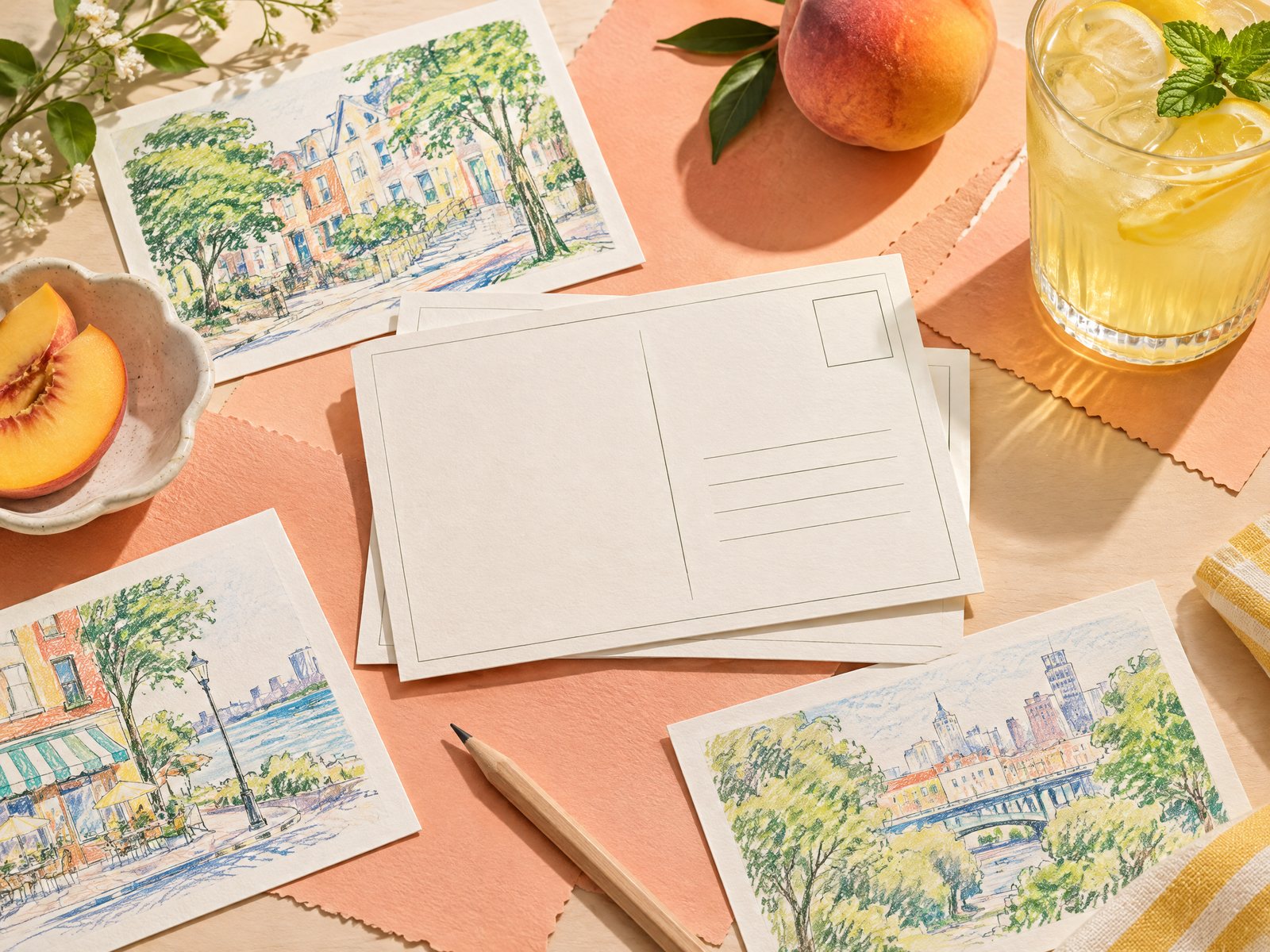
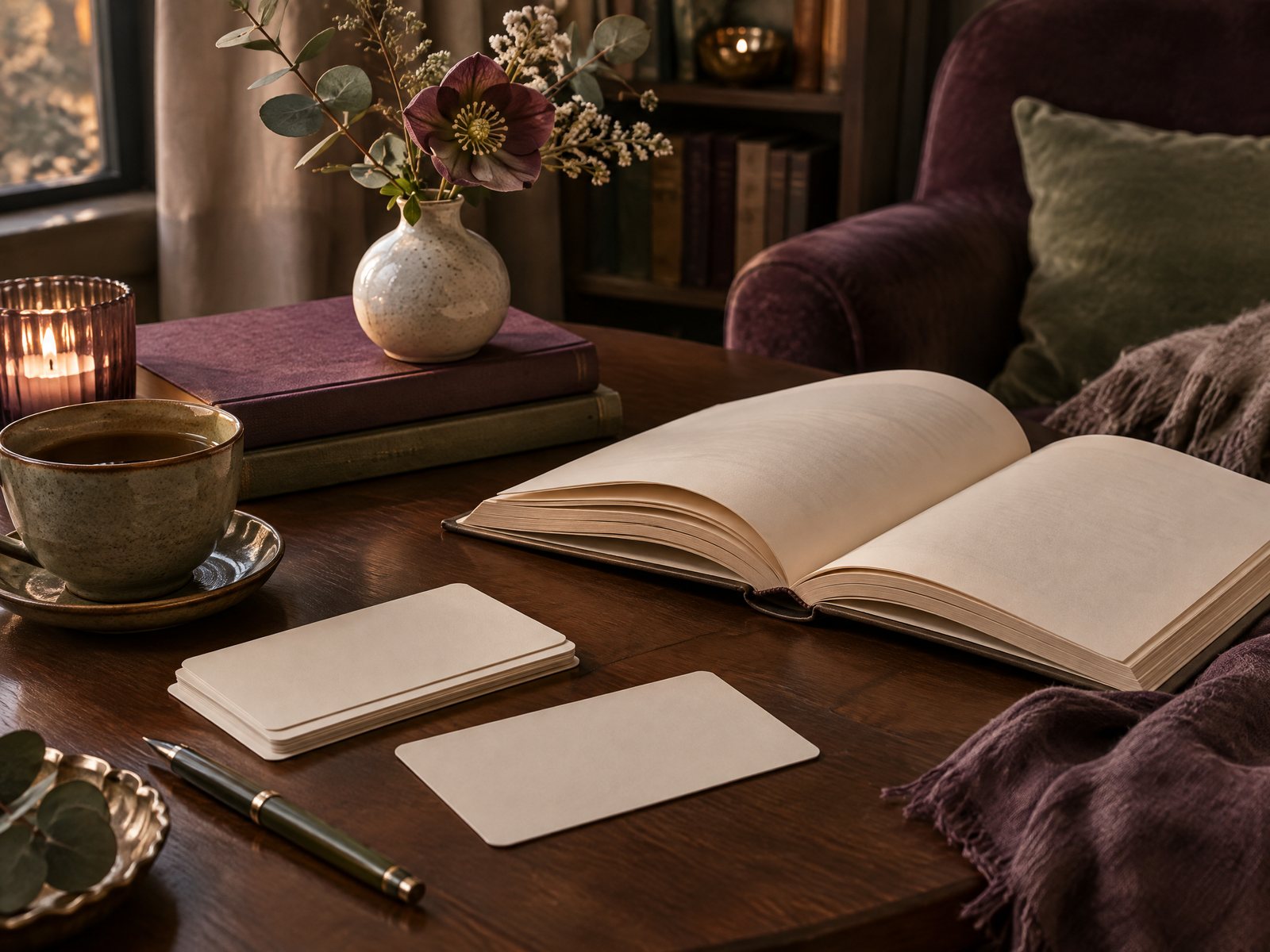
For materials, choose cards that are easy to handle and write on. The Pastel Academia Note Cards are a practical example of a 3 x 5-inch index-card format with a ruled side and blank side, useful when some prompts need a short response while others invite a sketch or word cluster. The Reading Room Note Cards suit a reading-centered table when you want a compact card set for indexing and quick observations. Farouk is presenting a shop selection here, not claiming to manufacture every design in the catalog, so use the product details as a planning reference and confirm current availability before building a larger set.
If you prefer a visual cue for rounds, the Starry Clouds Note Cards can form a separate pile for opening or closing questions. Keep the cue secondary: guests should be able to focus on the poem rather than perform a theme. The broader note cards collection is useful when you want to compare available formats before choosing a deck size.
Run the evening without turning it into a test
Set out the cards, pencils, water, and a visible “pass” card before anyone arrives. Put the books slightly to one side so the deck does not look like an exam station. A simple two-hour rhythm might be:
1. Welcome, 10 minutes: explain the optional reading rule, show the pass card, and invite each person to say their name or simply wave. 2. Quiet arrival, 15 minutes: everyone reads a poem privately or looks through a chosen book. Draw one noticing card for a low-stakes first round. 3. First sharing, 25 minutes: guests may read, summarize, or name a detail. Keep responses to a few minutes each. 4. Break, 10 minutes: let conversation become informal; do not fill the pause with another task. 5. Response round, 30 minutes: use connection or making cards. People can write first and share second, or not share at all. 6. Closing, 15 minutes: ask one brief question such as “What would you like to notice before the next gathering?” Collect cards that should be revised.
Name the time boundary before the first reading: “We will give each person about three minutes, and anyone may pass.” This prevents the most confident speaker from taking the whole evening without making that person the problem. Use a gentle timer only if the group agrees. Otherwise, a host can raise a hand at the two-minute mark and say, “One last thought?”
Respond to poems with observations and questions rather than verdicts. “I noticed the shift from indoors to outdoors” opens a conversation; “That ending is confusing” closes one quickly. Do not ask a guest to explain a poem they wrote if they have not offered it for critique. A prompt card can say “What did you notice?” rather than “What does it mean?” That small wording change gives the writer ownership of their work.
Adjust the cards when the room tells you to
The first version of a deck is a draft. If guests repeatedly skip a card, inspect its demand. “Describe the most painful memory this poem evokes” is too intimate for many gatherings; replace it with “Describe a memory of a place, real or imagined, that fits the poem’s atmosphere.” If answers become vague, narrow the prompt with a visible limit: “Use one color, one object, and one verb.” If the discussion becomes competitive, remove interpretive prompts for a round and return to sound, image, or personal preference.
A common failure is too many cards. When guests spend more time choosing than reading, remove half the deck and place three face up. Another is uneven access: tiny handwriting, glossy surfaces, or cards scattered across a dark table can make participation harder. Use large, legible lettering, sufficient light, and a fixed place for the pass pile. A third failure is accidental pressure. If the host says “Everyone has to draw,” the optional format has disappeared. Say instead, “I’ll draw first; you can join, listen, or choose another route.”
Keep a small host note after the event: which prompts created useful pauses, which needed explanation, and whether the timing felt rushed. Do not record guests’ private responses without permission. The deck is a reusable structure, not a record of what anyone disclosed. For ideas about extending paper-based reading reflection without turning the gathering into a log, see reading journal prompts beyond ratings, and use how to start a reading journal only if someone wants a separate personal practice. For a simple way to keep a marker with the book between gatherings, the reading log bookmarks guide offers a different, more individual approach.
A successful poetry evening does not require the perfect selection, a dramatic interpretation, or a room full of people who already know literary terms. It needs a clear invitation, original questions, and enough room for silence. Let the cards offer a next step, then let guests decide how far they want to take it. That balance—structure without pressure—is what turns a stack of paper into a hospitable evening.
If you need help selecting a format or checking a current item, contact Farouk Book Store.
Related reading: How to Start a Reading Journal You Will Actually Use · Reading Journal Prompts Beyond Ratings and Summaries · How to Use Reading Log Bookmarks to Track Your Books