The problem with a seasonal reading nook is rarely a lack of ideas. It is that the chair becomes a holding area for unopened books, loose notes, charging cables, and decorative objects that make sitting down feel like another task. Farouk Book Store’s paper goods offer a useful starting point for a smaller solution: make the reading corner serve the next few reading sessions, not an imagined perfect season. Choose a short queue, give each book one clear place, and let autumn appear through a few movable paper details rather than a permanent makeover.
This is an editorial way to combine items from a shop’s selection, not a claim that Farouk manufactures every design in the catalog. The aim is a corner you can reset in minutes when your reading mood changes.
Start with the chair, the queue, and the reach zone
Begin with the seat you already use. It might be an armchair, the end of a sofa, or a dining chair pulled near a lamp. Notice what you can reach without standing: the book, a drink, a pencil, and the place marker. That small “reach zone” determines what belongs in the corner. If an accessory cannot be used from the seat, it is decoration with a storage problem attached.
Limit the active queue to three books. Give each a different job rather than choosing three titles that compete for the same mood:
- The main read: the book you expect to open first.
- The short reset: essays, poetry, or another brief format for a ten-minute window.
- The change-of-pace read: something with a different pace, subject, or visual tone.
Three is enough to offer choice without turning the corner into a mini library. Keep the rest of the shelf or stack elsewhere. A large “to read” pile can be encouraging, but it is not the same thing as an accessible reading plan.
Place the main read closest to the chair, the short reset beside it, and the change-of-pace title slightly behind. That physical order quietly answers the question, “What should I pick up tonight?” If all three are equally prominent, you may spend the available reading time choosing instead of reading.
A narrow tray or small open basket can hold the non-book items. Leave the books visible. The corner should communicate a next action at a glance: sit, pick one, open to the marker.
Use paper cues that can move with your reading
Autumn details work best when they are temporary. A removable note can mark a question, a page to revisit, or the point where you want to stop for the evening. Keep the note outside the text if you are borrowing the book, or use a separate card if you do not want anything adhesive near the pages. The point is not to build a complicated annotation system; it is to make returning easier.
For a small color cue, consider Blooming Records Sticky Notes from the catalog. The product is described as a 3-by-3-inch pad with 50 sheets, and each sheet has adhesive backing for placement and removal. Those details make it practical for a nearby tray or a personal book you are comfortable marking. Do not treat the note as a permanent label: write one short prompt, place it where you will see it, and remove or replace it when the reading task changes.
Useful autumn prompts can be plain and specific:
- “Return here after the next chapter.”
- “Look up this reference later.”
- “What changed in this scene?”
- “Read this passage aloud only if you want to.”
Avoid writing a full review before you have finished the book. A crowded note becomes a second assignment. One line is enough to preserve a thought without interrupting the reading experience.
A bookmark can carry the seasonal character while remaining functional. The Rain Day Cute Aesthetic Bookmark has a rain-themed design and is described as approximately 2 by 6 inches, double-sided on glossy cardstock with rounded corners. It can suit a rainy afternoon corner without requiring a whole weather-themed display. Tuck it into the main read, then move it when that book leaves the active queue.
The adjustment matters: do not put a different decorative marker in every book simply to make the stack look finished. One focal bookmark creates a calmer visual rhythm. If you need separate markers for separate books, keep their designs related in scale or color and let the books supply most of the variation.
Build an autumn palette without staging a set
“Autumn” does not require fake leaves, a new blanket, and a shelf full of orange objects. Choose one warm note and one quiet neutral, then let the room’s existing materials do the rest. A brown chair, cream pages, a muted red mug, or the changing light near a window can already establish the season.
For a reading-focused corner, think in layers:
1. Base: the chair, lamp, and one place to set the book. 2. Reading tools: the active book, bookmark, pencil, and a small group of removable notes. 3. One visual accent: a bookmark or paper item that introduces the seasonal mood.
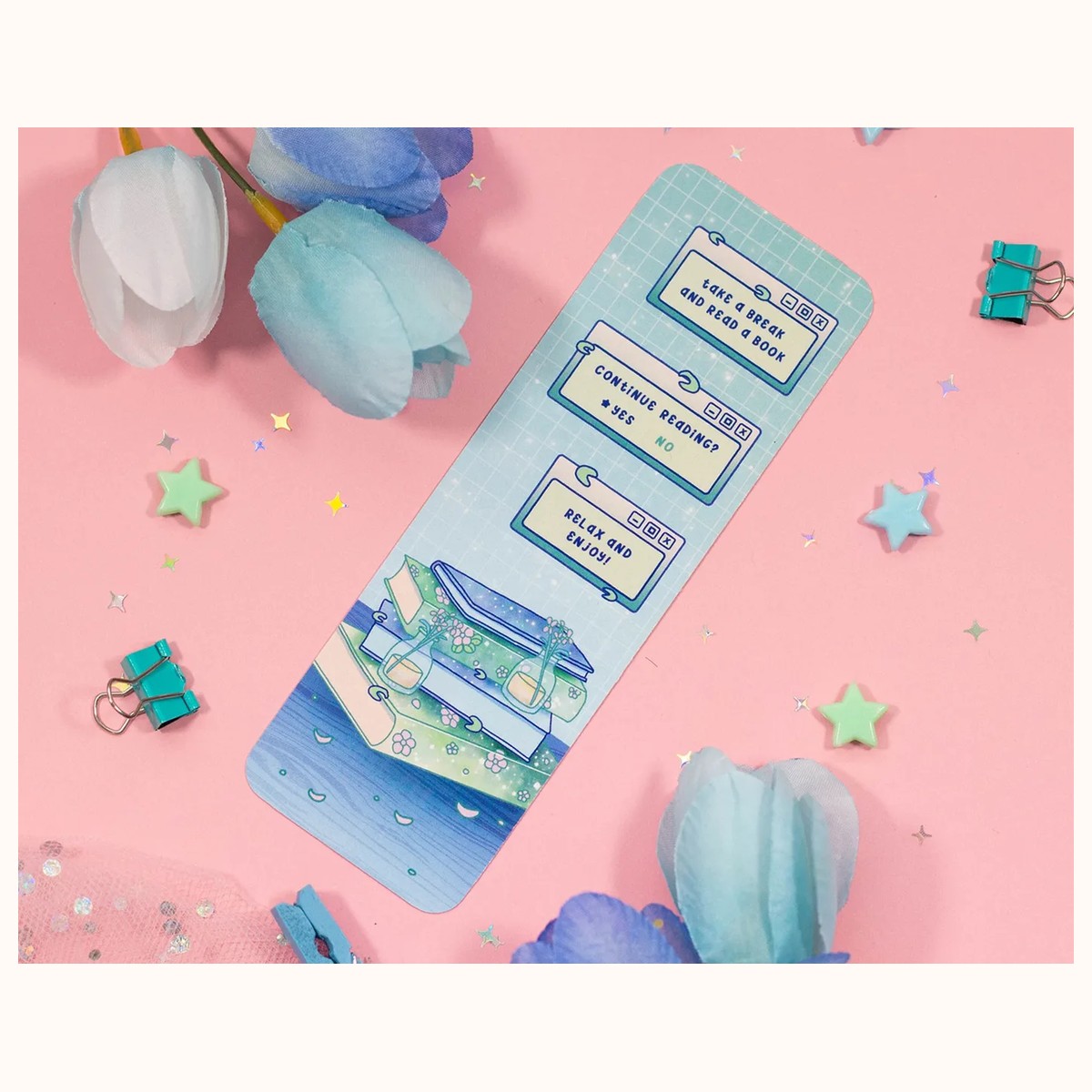
The Stacked Books Cute Aesthetic Bookmark is a natural option when you want the accent to point back toward reading rather than toward a holiday. It can sit in the main book or in a shallow tray beside the queue. Pair it with neutral paper and a single warm-colored object; do not add several competing motifs around it.
If your corner already contains a patterned cushion, a bright lamp, or a busy art print, use the bookmark as the only strong pattern. If the surrounding space is plain, you can add one small note card or paper tray, but stop before the corner starts looking like a display assembled for a photograph.
The common failure is over-theming. A reading nook covered in seasonal objects may look finished but become inconvenient: the lamp is blocked, the book has no landing place, or the chair is difficult to approach. Remove anything that has to be moved before you can sit down. Seasonal atmosphere should lower friction, not create a pre-reading chore.
Make the reset part of the design
An autumn corner succeeds when it survives an ordinary week. Create a two-minute reset that you can do after reading. Return the bookmark to the current page, put loose notes in the tray, and move the finished book out of the active queue. If a note no longer helps you find your place, discard it. If a book has stalled twice, replace it with the change-of-pace read rather than treating the stall as a failure.
Use a simple status system for the three books:
- Now: open or next to the chair.
- Soon: behind the main book, ready but not demanding attention.
- Later: elsewhere, so it does not crowd the corner.
This prevents the familiar autumn mistake of keeping every possible read within reach. The corner is not a storage system; it is a decision system.
You can also prepare a “closing position.” For example, leave the main book closed with the bookmark visible and the next sticky note on the tray, but keep drinks and pens away from the pages. If the corner is shared, use a basket or sleeve so another person can clear the chair without losing your place. For readers who carry books between rooms, a bookmarks collection is a practical place to compare the shop’s available paper markers before choosing one that fits the queue.
When the season shifts, change only one layer at a time. Replace the focal bookmark first. If the corner still feels right, leave the rest alone. A full reset is appropriate only when the reading queue, room, or available light has genuinely changed. Small adjustments keep the space personal instead of making it feel like a temporary retail display.
A finished corner in three versions
The rainy-window version uses one chair, a warm lamp, the Rain Day bookmark in the main novel, and a small pad of removable notes. Keep the palette to cream, brown, and one muted blue-gray. The visual cue is weather; the activity remains reading.
The literary-stack version uses the Stacked Books bookmark, three books arranged by reading role, and no additional patterned object. Add one plain tray for a pencil and notes. This is the best choice when the room already supplies autumn color through wood, textiles, or evening light.
The flexible shared version uses the Sunset Music Player Cute Aesthetic Bookmark for a slightly livelier accent, with the active book stored in the seat-side reach zone and the other two books on a nearby shelf. The bookmark’s slim, approximately 2-by-6-inch profile is described as suitable for books, journals, and planners, so it can move with whoever is reading. Keep personal notes separate from shared supplies.
If you are comparing paper goods for the corner, browse the Bookmarks collection, then check the item details before deciding. Farouk’s website is a shop selection, and availability or order details may need confirmation. For questions about the catalog or a particular item, use the Farouk Book Store contact page; do not assume an item is reserved until the store confirms it.
The most successful autumn reading corner is not the one with the most seasonal styling. It is the one that makes tonight’s book easy to find, gives a passing thought somewhere temporary to land, and leaves enough open space for the next person—or the next season—to use it. Keep the queue short, let one paper accent set the tone, and make every other object earn its place by helping you read.
Related reading: How to Start a Reading Journal You Will Actually Use, How to Use Reading Log Bookmarks to Track Your Books, and Bookmark Gift Pairings for Different Kinds of Readers.