One notebook can be a calendar companion, idea bank, task list, reading log, and memory keeper without becoming a confusing pile of unrelated pages. The key is to give each purpose a visible home. These creative notebook sections turn one everyday book into a flexible system: useful enough for errands and appointments, but personal enough to invite sketches, observations, and small experiments.
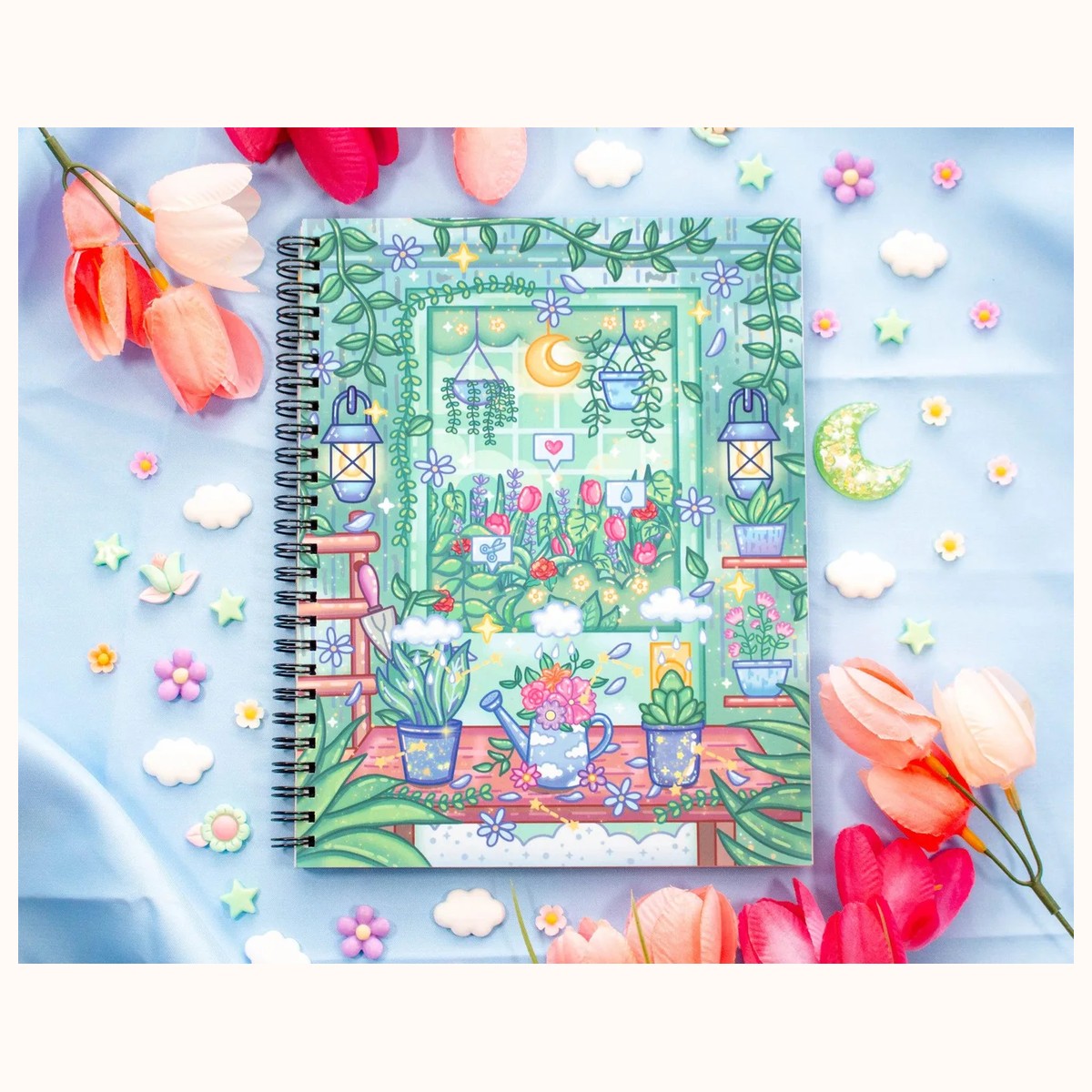
Start with a notebook that suits the way you write. The Botanical Bliss Spiral Lined Notebook (7x9\") has lined college-ruled pages, a spiral binding that allows pages to lie flat, and 120 pages for a substantial all-in-one setup. If you prefer to compare formats, browse the Journals & Notebooks collection. The aim is not to fill every page immediately. It is to make the next useful note easy to find.
Set up the notebook so sections stay findable
Before writing content, reserve a few pages for navigation. Use the first two pages as an index. Number pages as you go, then record entries such as “weekly plan—p. 8” or “gift ideas—p. 41.” This is more adaptable than permanently assigning a large block to every subject. A topic that grows can continue later, and the index can connect the two places.
Leave two or three pages for a key. Keep symbols simple: a square for a task, a dot for a note, a star for something to revisit, and an arrow for an item moved forward. Draw a small tab, colored line, or washi-tape edge for sections you open often. A narrow strip of Paper Planes and Boats Washi Tape can mark a page edge or separate a monthly review without covering your writing area. Test decorative tape on a spare page first if you are unsure how it will lift from the paper.
Choose a section order based on frequency, not aesthetics. Put daily planning near the front if you consult it every morning. Put reference pages near the back if they are used occasionally. If you tend to abandon complicated systems, begin with only three labels: “now,” “later,” and “keep.” Add sections after two weeks of actual use. A beautiful opening spread is not helpful if it delays the first practical entry.
A common setup problem is overcommitting pages. If you reserve twenty pages for meal planning and use only two, the unused space can make the notebook feel unfinished. Instead, start with a flexible “contents” page and let the book reveal what deserves room. Numbering also solves the problem of running out of a section: continue on the next available page and add a cross-reference.
Build a daily command center
The first working section should reduce mental clutter. Give each day a small block with three parts: appointments, actions, and capture. Appointments are fixed commitments such as a class or call. Actions are tasks that can be completed. Capture is for facts, questions, or ideas that do not yet belong elsewhere.
A practical daily layout might read:
- Fixed: 10:30 appointment; leave by 10:00.
- Do: send invoice; buy rice; reply to two messages.
- Capture: ask about the replacement cable.
Keep the task list short enough to scan. If every possible task is written beside today’s date, urgent work can disappear among low-priority intentions. Move unfinished items forward deliberately. Ask whether the task is still relevant, whether it should be broken into a smaller action, or whether it belongs on a later list. This three-way decision is more useful than repeatedly copying the same phrase.
Add a weekly reset after every five to seven daily pages. Review open tasks, upcoming commitments, and notes marked with a star. Then choose a handful of outcomes for the coming week. For example, “finish project” is vague; “draft the introduction and request one review” gives you two visible actions. Leave a small box for what worked and what created friction. If mornings are rushed, prepare the next day’s top action before closing the notebook.
If your pages become crowded, do not shrink your handwriting or add more symbols. Use a facing page for overflow, or attach a removable note for temporary details. The Straight-a-student Check List Cute Aesthetic Sticky Notes can hold a short, movable list, while the notebook keeps the decision or final record. Remove the note once its contents are transferred; otherwise temporary reminders become permanent clutter.
Give ideas, projects, and reference notes separate jobs
An everyday book becomes more useful when “ideas” does not mean the same thing as “projects.” Create an idea section for fragments: titles, questions, places to visit, possible recipes, gift concepts, or a sentence you want to remember. Do not force every fragment into a plan. Date each entry and add a quick label, such as “home,” “writing,” or “learning,” so a future review has context.
A project section is for an idea that has earned a next step. Give each project one compact page with the desired result, constraints, next action, and waiting items. For a small home project, the page might say: “Result: organize entry shelf. Constraint: use existing space. Next: measure two shelves. Waiting: confirm storage box size.” When a project stalls, diagnose the blockage rather than rewriting its title. The next action may be too large, a decision may be missing, or someone else may need to respond.
Use a reference section for information you expect to consult repeatedly. Helpful pages include measurements, packing lists, recurring errands, favorite questions for appointments, or a checklist for preparing a presentation. Add a date when the information may become outdated. Keep sensitive information out of an unattended notebook, and avoid copying account passwords or full personal identification details.
For studying or reading, use a repeatable note pattern: source, key point, evidence or example, and your next question. A lined page can support a short paragraph, while a blank margin can hold a symbol or keyword. If you need cards that move independently from the notebook, the Starry Clouds Note Cards offer a 3 x 5 format with one lined side and one unlined side. Use them for a temporary sort, then transfer only the durable conclusions into the notebook.
The troubleshooting decision is simple: if a page will be consulted often, keep it in the notebook; if it needs to travel separately, be rearranged, or be handed to someone, use a loose card or note. This prevents the main book from becoming both a permanent archive and a temporary inbox.
Make room for reflection without losing usefulness
A practical notebook should also record what you notice. Add a low-pressure reflection section for weekly highlights, small wins, questions, and adjustments. A four-line prompt is enough: “What helped?” “What drained time?” “What should I repeat?” “What is one change for next week?” Specific answers are more useful than general mood reports. “The afternoon walk helped me focus” gives you an experiment to repeat; “good week” does not.
Create a small observation or creativity section for sketches, color notes, overheard phrases, layout ideas, or objects to research. Give it a rule that protects usefulness: one page can be messy, unfinished, or purely visual. You do not need to turn every creative entry into a project. If you want a visual cue, place a small sticker on the corner rather than decorating every page. The Cloudy Skies Aesthetic Sticker Sheet can mark reflection pages or recurring themes, but leave enough clear paper for the next note.
At the end of each month, review the notebook with three passes. First, migrate anything still actionable into the daily or project section. Second, index durable reference notes. Third, circle entries worth keeping as memories or ideas. If a page contains private material, decide whether the notebook should be stored in a secure place before carrying it outside the home.
Watch for three signs that the system needs adjusting. If you cannot find notes, improve indexing or use clearer page labels. If you stop opening the book, reduce the number of sections and make the daily page smaller. If decoration takes longer than writing, set a one-minute styling limit. The best system is not the most elaborate one; it is the one that helps you capture, decide, and return to what matters.
A single notebook can therefore hold both structure and play. Start with navigation, build a dependable daily command center, separate ideas from active projects, and reserve space for reflection. After a week, keep the sections that genuinely help and revise the rest. Your notebook does not need to predict every future need. It only needs to make today’s next note clear.
For product details, sizing, and current catalog information, check the relevant product pages or contact Farouk Book Store before making a purchase.
Related reading: How to Choose Stickers for Journals and Planners, Vinyl vs. Paper Stickers: A Complete Guide, 2026 Stationery Trends: Color, Texture, and Joy