A movie night can end with the bowl in the sink and every detail blurred by the next morning. The problem is not a lack of photographs; it is that the memorable parts are often tiny: the scene that made everyone pause, the snack someone improvised, or the sentence you said afterward that was funnier than the film. Farouk Book Store can help you turn those fragments into a modest paper keepsake, without reproducing a poster, copying dialogue, or trying to make a commercial-looking scrapbook.
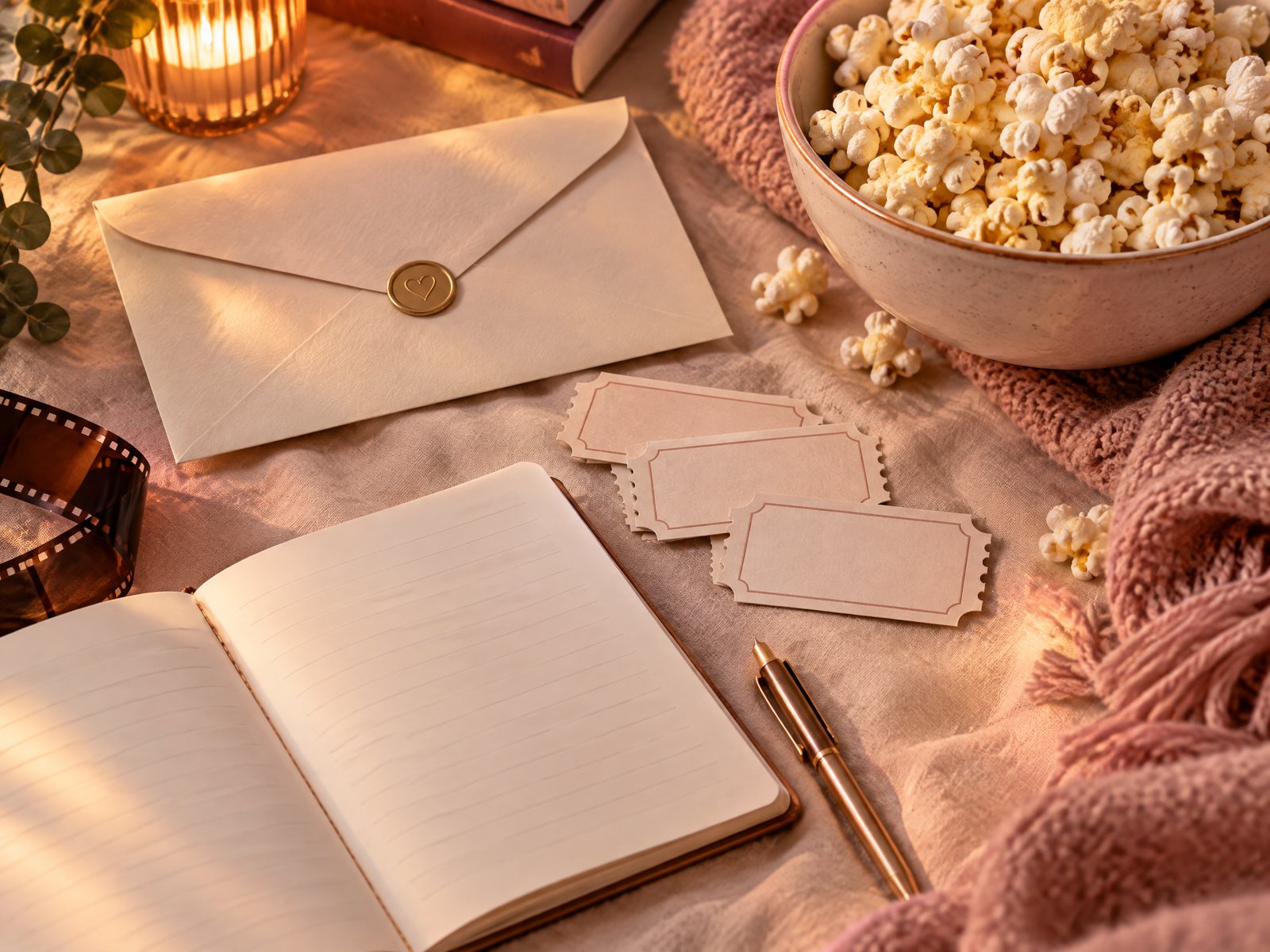
The idea is a memory envelope: one outer envelope holding a few original reaction cards, a rough sketch, and a short record of the evening. It is deliberately smaller than a full movie journal. You are preserving your group’s experience of watching, not building a replica of the film’s marketing. That distinction keeps the project personal, manageable, and respectful of copyrighted artwork and text.
Decide what the envelope is actually remembering
Start before the opening credits with one decision: is this keepsake about the film, the gathering, or the conversation afterward? It can include all three, but choosing a primary focus prevents a crowded result. For a solo watch, the focus might be “what I noticed this time.” For a family night, it might be “what we all remember differently.” For a friend gathering, it could be “the mood and rituals around the screen.”
Write that focus on a temporary planning slip, not on the finished card. Then set a limit of three to five pieces. A useful set might be:
- a small “before” card with the date, viewers’ first expectations, and the snack or drink chosen;
- a reaction card with one original sentence about a moment, without quoting the film;
- a visual card containing an abstract color block, shape, or tiny sketch inspired by the evening;
- a “talked about afterward” card recording the group’s own discussion;
- a closing card noting whether anyone would watch it again and why.
This list is intentionally selective. Saving every ticket stub, wrapper, and opinion can turn a keepsake into an inventory. If the evening involved children or guests who prefer privacy, ask what they are comfortable having preserved. A person can contribute a drawing while declining to have their name or opinion included. The envelope should document shared enjoyment, not pressure anyone into signing a permanent record.
A practical rule is to write only what you personally observed or what someone explicitly offered for the keepsake. Avoid copying a recognizable line from the film, reproducing a character illustration, or tracing a promotional logo. “The hallway scene changed the room’s mood” is your response; a verbatim line is not. An invented symbol, a few color swatches, or a sketch of the popcorn bowl gives the memory its own visual language.
Build the paper set around reactions and sketches
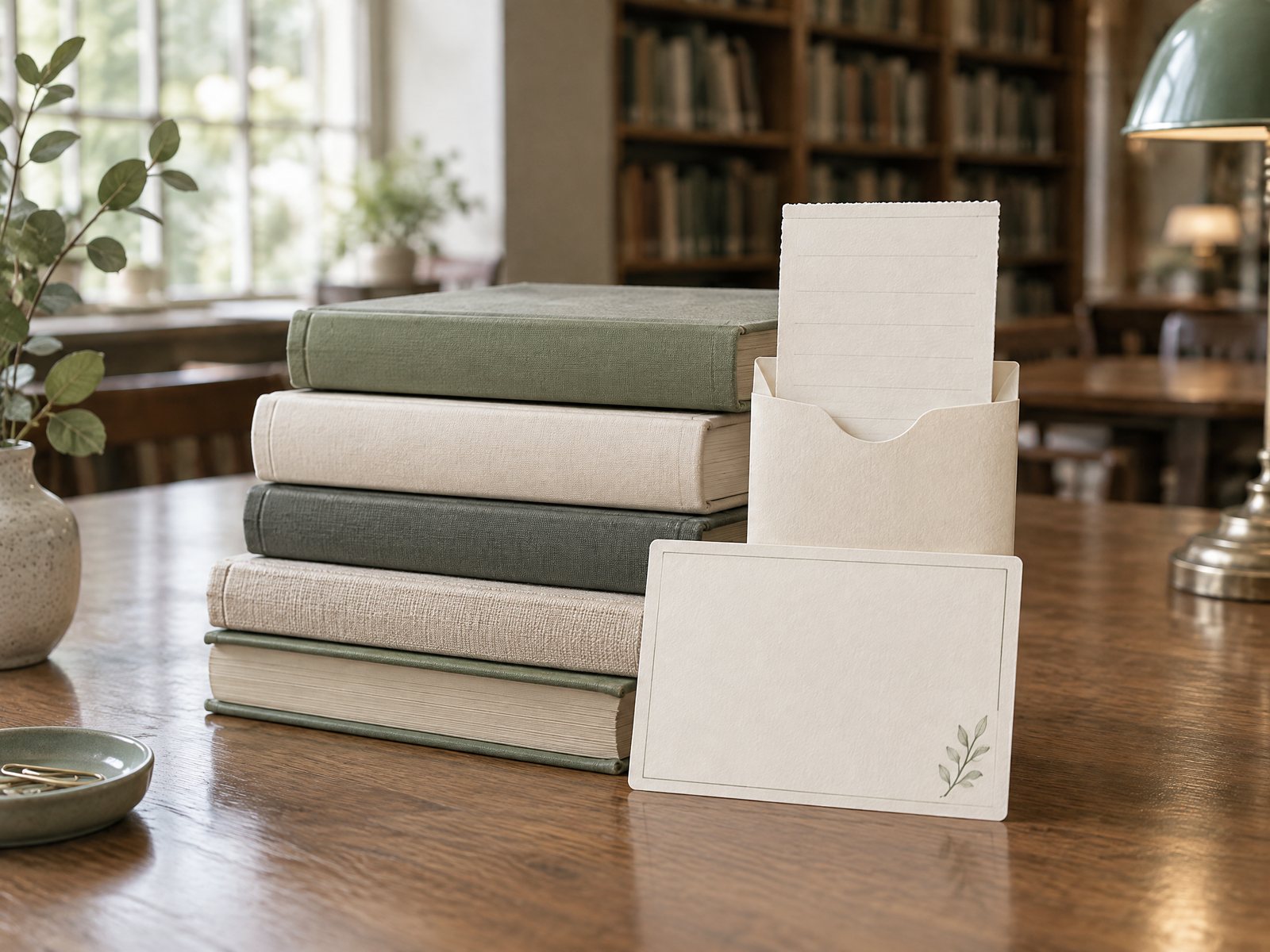
Use cards with two jobs rather than a large stack of identical pages. One side can hold a short response; another can hold a drawing, color study, or diagram of where everyone sat. The Reading Room Note Cards are listed as a 50-card set measuring 3 by 5 inches, with one lined side and one blank side. That combination makes them a sensible format for this project: the lined side can hold a few sentences, while the reverse can stay visual. The listing describes matte 14 pt paper and notes that colors may vary from photographs, so treat the cards as a catalog option rather than promising an identical appearance on arrival.
Give each card a narrow brief. “Draw the shape of the room’s light” produces a more personal result than “draw something from the movie.” “Use three colors for the mood before the ending” avoids inviting a copied character or scene. “Sketch the snack table from memory” makes the object of remembrance your evening. If your group prefers words, use original prompts such as:
- What did you expect to feel, and what actually surprised you?
- Which small detail did you notice before anyone else mentioned it?
- What did the room sound like during the quietest stretch?
- What question did the ending leave us discussing?
- What would we change about our next movie night, apart from the film choice?
Leave generous blank space. A card that contains four cramped paragraphs can feel like homework. A single sentence and an uneven sketch may preserve more atmosphere. If someone contributes a joke, ask whether it is for the private envelope or for sharing with others. That one check matters when guests have different comfort levels about being quoted, even in a friendly household keepsake.
For a more tactile detail, cut your own plain ticket shapes from spare paper. Write only original information such as “Friday evening,” “living-room screen,” or “extra-spicy popcorn.” Do not imitate the film’s actual ticket design, poster lettering, or branded marks. If you want a visual cue, use a simple rectangle with a perforation pattern or a hand-drawn star that belongs to your evening, not to the source material.
Choose an envelope that supports the story
The outside should signal “small archive,” not reveal every detail. A printed envelope can create a finished presentation while leaving the contents personal. Farouk’s Reading Room Envelopes are listed as an A7 set of 10, approximately 5.25 by 7.25 inches, printed on both exterior and interior, with a moisture-seal closure. Those listed dimensions give you a useful planning boundary: test-fit the cards and any folded sketch before writing on them, and do not assume a bulky collection will lie flat.
If you prefer a more romantic or colorful surrounding, compare the options in the envelopes collection, then choose by the mood of the actual night rather than by a film genre. A quiet black-and-white evening does not require a dramatic theme, and a comedy night does not need novelty graphics. The outer envelope can simply carry the date, a private title such as “the rainy Friday watch,” or a hand-drawn mark that your group recognizes.
Make a mock-up before committing. Place the empty envelope beside the cards, fold one card in half, and add the proposed sketch. Common failures become obvious at this stage. If the cards bow, reduce the number of pieces. If the closure sits under pressure, move the thickest item to a separate sleeve or omit it. If the printed interior competes with a colorful drawing, use fewer inks on the cards rather than adding more decoration. The goal is a keepsake that opens calmly, not a package that must be forced shut.
A small ticket-shaped object can sit beside—not inside—the envelope as a display cue. The Ticket Aesthetic Cute Fridge Magnet is listed as approximately 3.2 by 1.6 inches with a magnetic backing and a matte finish. It could hold a temporary reminder on a refrigerator while you assemble the cards, but it is not a paper record of the movie night and should not be treated as one. Separating the functional reminder from the archival contents keeps the envelope focused.
Assemble, label, and store the memory honestly
Assemble in chronological order only if that helps someone understand the evening. Otherwise, put the strongest card first: perhaps the group’s unexpected sketch or the short note about what everyone discussed afterward. Add a contents slip on the back rather than labeling every card with a long explanation. A simple sequence—before, during, after, image—makes the envelope easy to revisit without turning it into a formal log.
Use pencil for a planning pass and a permanent pen only after the wording feels right. Check names, dates, and consent before sealing. If the memory includes a guest’s personal story, ask whether it should stay private. If you are giving the envelope to someone else, let them know what is inside and whether they may add to it later. “Please open when you feel like revisiting the night” is a lower-pressure invitation than demanding an immediate reaction.
Do not add borrowed posters, printed screenshots, copied reviews, or pages of dialogue. A title written for identification may be enough, but the contents should remain your own observations and drawings. If you want to remember a visual style, translate it into an independent choice—cool colors, hard-edged shapes, or a row of circles—rather than recreating a recognizable composition. This is also a useful failure check: if a stranger could mistake your card for official film merchandise, simplify it.
Finally, label the envelope with facts you can verify: the date, the people who agreed to be named, and perhaps a private rating system that your group invented. Store it flat in a dry, ordinary place away from a crowded snack drawer. Farouk’s About page provides the shop’s general brand context; for an order question, use the site’s contact page and confirm current availability and order details. The website’s bag prepares an email order request rather than functioning as a payment checkout, so inventory, taxes, and shipping should be confirmed rather than assumed.
The best movie-night envelope is not the most decorated one. It is the one that can answer, years later, what your evening felt like without borrowing the film’s voice. Keep the cards selective, make every drawing yours, and leave room for a future note if the conversation continues.
Related reading: A Library-Loan Paper Pocket with Farouk, A Photo-Caption Envelope with Farouk Paper Goods, and A Shared Mini-Art Envelope Inspired by Farouk.