You have left a meal, an afternoon visit, or a welcoming weekend stay and want to acknowledge the effort without turning gratitude into another obligation. A large present can feel out of proportion, while a last-minute item from a convenience shelf can feel impersonal. A small host appreciation parcel offers a useful middle ground: one modest paper item, a brief note if you want one, and delivery timed for the host’s convenience. Farouk Book Store’s editorial selection makes it possible to choose a compact stationery piece around the person’s habits rather than around a fixed gift formula.
The key is restraint. This is not a thank-you writing exercise or a decorative hamper. It is a considered little package that says, “I noticed the care you put into having me here,” while leaving the recipient free to use, share, or simply enjoy it on their own schedule.
Start with the host’s actual context
Before choosing an item, identify what you are appreciating. Was it a cooked meal, a place to stay, help with a gathering, or an invitation that made a difficult week easier? The answer helps you set the scale and avoid a mismatch. A host who invited several people for coffee may appreciate a small, easy-to-store paper item. Someone who opened their home for a weekend may suit a slightly more finished parcel, but it still does not need multiple objects.
Use three quick filters:
- Use: Would this person plausibly write lists, leave reminders, keep cards, or use paper at a desk?
- Space: Can the item fit in a drawer, tote, or existing stationery spot without creating clutter?
- Privacy: Does the choice avoid assumptions about their taste, household, schedule, or personal routines?
These filters are more reliable than guessing from a broad category such as “host gift.” For example, a colorful novelty object may be charming to one person and awkwardly conspicuous to another. A compact note-card bundle can work across more settings because it can become a shopping note, a label, a small sketch, or a message for someone else.
It also helps to separate appreciation from repayment. Do not choose a parcel that implies the host now owes you another invitation. Keep the value and presentation modest enough that the gesture can stand on its own. If you are visiting again soon, delivering it after the occasion—or sending it later—can make the intention clearer than arriving with a conspicuous gift at the door.
Choose one useful paper anchor
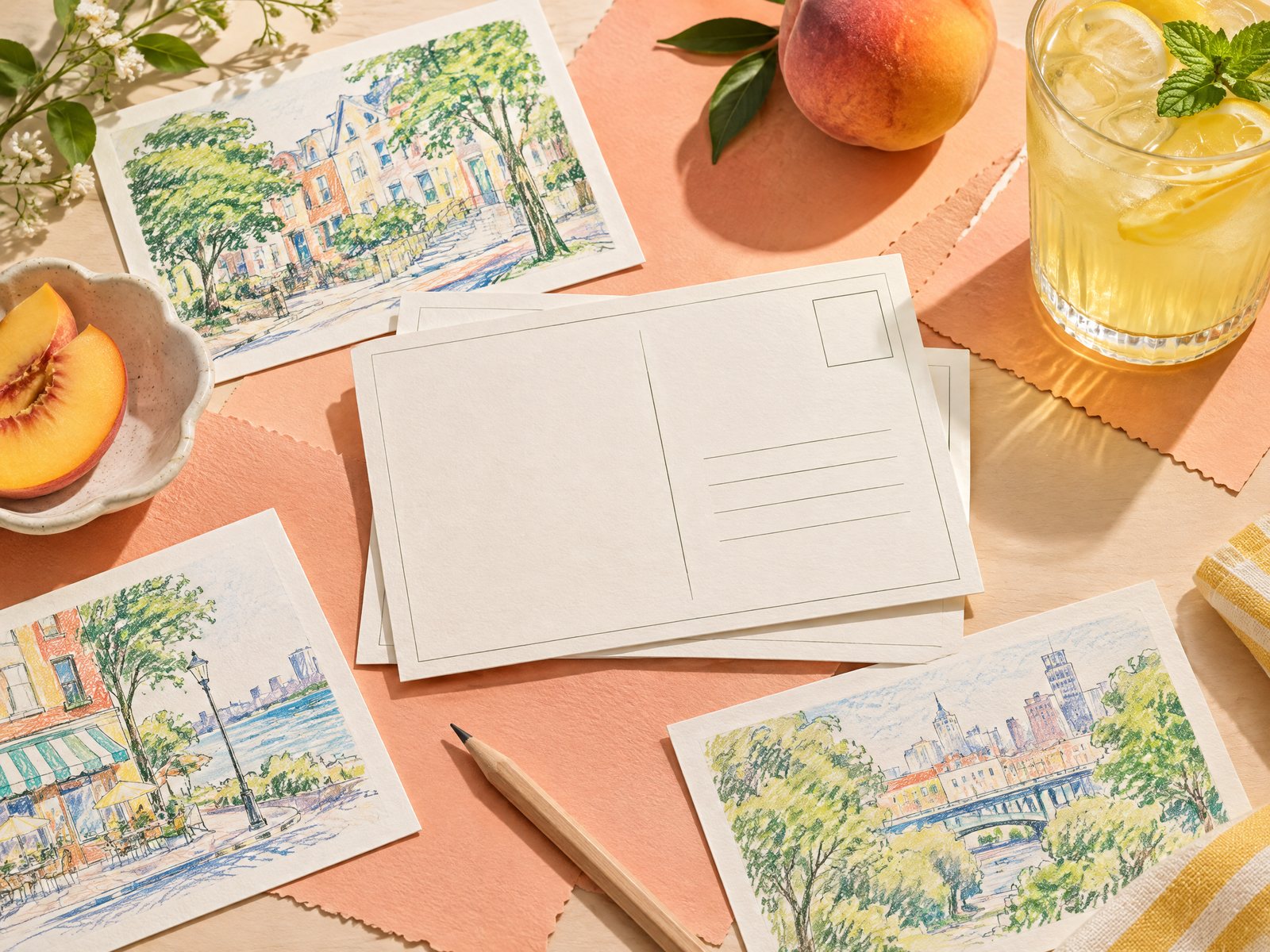
A parcel becomes easier to edit when you select one anchor item first. In Farouk’s note cards collection, the Pastel Academia Note Cards are a practical option for a host who enjoys a soft, coordinated look. The catalog describes a bundle of 50 cards sized 3 by 5 inches, with a ruled side for notes and a blank reverse for sketches or additional writing. That two-sided format gives the recipient choices without requiring you to explain how it should be used. It is a good fit for someone who keeps a kitchen list, labels a project, or likes a small card within reach.
For a quieter, more bookish visual direction, consider Reading Room Note Cards. They are also listed as a 50-card, 3-by-5-inch bundle with a lined side and a blank side. The difference is less about function than about presentation: choose this style when the host’s shelves, reading nook, or stationery already lean toward a calm literary mood. Because the cards are compact, they can be the complete gift rather than one component in an overfilled basket.
A third route is a short note-card-and-envelope pairing. Pastel Academia Envelopes are listed as a set of 10 A7 envelopes, approximately 5.25 by 7.25 inches, with full-color printing and a moisture-activated seal. Pairing them with a note-card bundle makes sense only when the recipient regularly sends or encloses paper messages. Otherwise, the envelopes can become a beautiful item that sits unused. The shop’s selection includes products from its catalog; treat each description as the basis for checking current fit, rather than assuming every design suits every host.
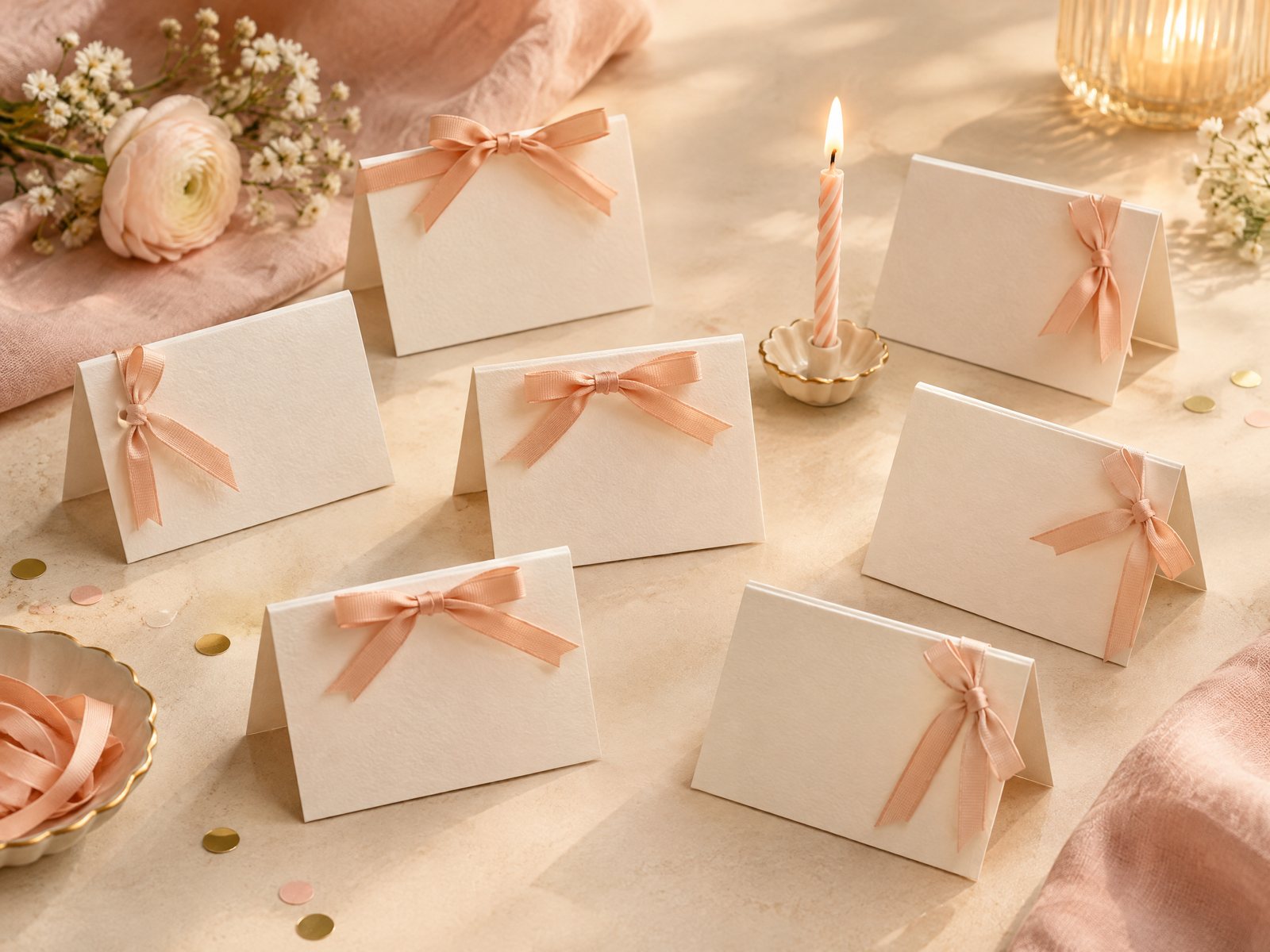
A useful decision rule is one anchor plus, at most, one supporting detail. If you choose note cards, the support might be a simple paper wrap or a blank parcel label—not another themed product. If you choose envelopes, let their printed appearance carry the presentation and skip extra decoration. A small parcel is successful when the recipient can immediately see what the main item is and why it was chosen.
Assemble the parcel without making it formal
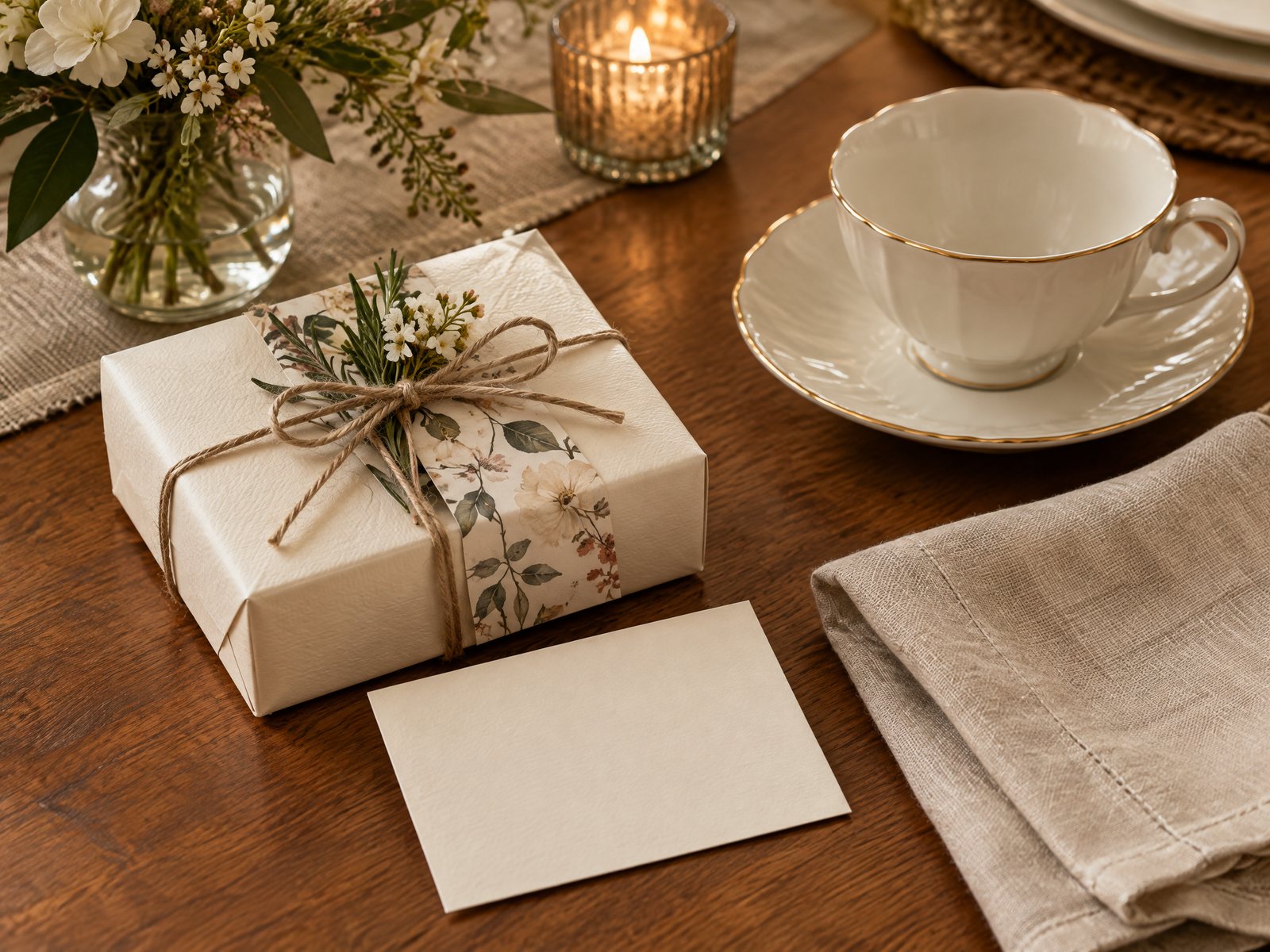
Start with a small box, paper bag, or folded paper wrap that protects the item and is easy to open. The parcel does not need a gift basket, filler, ribbon cascade, or elaborate color story. A cream wrap with one floral paper accent can look finished without turning a casual gesture into an event. If the host prefers understated things, use plain paper and let the product’s own design remain the only visual detail.
Place the anchor item flat or upright so it is visible as soon as the parcel opens. Avoid burying a compact stationery bundle under tissue; that creates suspense where clarity would be kinder. If you add a card, leave it on top rather than wedged between products. If you add an envelope set, keep it beside the note cards instead of stacking everything into a tightly packed container that may bend corners.
Keep the contents to a simple formula:
1. One useful paper item chosen for the host’s context. 2. One short identifying note, if a note feels natural in the relationship. 3. One calm finishing detail, such as a paper accent or neat fold.
That formula also works when the host has limited storage, shares a home with others, or does not enjoy receiving objects. If the recipient has mentioned that they are trying to reduce clutter, make the parcel even smaller: a single card bundle or envelope set, with no decorative extras. If they already own many cards, choose the envelope set only if you have seen them use envelopes; otherwise, appreciation can be expressed through a note alone rather than forced into a purchase.
Do not include food, fragrance, or personal-care items just because they are common host gifts. Those choices introduce preferences and sensitivities that the paper parcel can avoid. A stationery-based gesture is not automatically right for everyone, but it gives you a clear way to keep the selection modest and non-invasive.
Match delivery to the relationship
Timing is part of the gesture. If you hand over the parcel immediately after the meal, the host may feel obliged to open it while guests are still present. That is not always what you want. A quiet handoff at the end of the visit—“I brought this for you to look at later”—sets a low-pressure expectation. You can also leave it with a short message the next day if the visit ended late or the host was managing cleanup.
For a casual host, an in-person handoff can be as simple as placing the parcel near their entryway before you leave and mentioning it once. For a more formal relationship, a neatly addressed package may feel appropriate, but confirm the delivery details rather than assuming. If you are ordering through Farouk’s website, remember that the bag prepares an email order request rather than functioning as a payment checkout. Inventory, taxes, and shipping require confirmation, so allow room for that process instead of promising a particular arrival date.
The delivery method should also respect boundaries. Do not leave a parcel in an exposed location without permission, attach it to a shared mailbox, or include a note that reveals private details about the gathering. If other guests contributed, decide in advance whether the parcel is from everyone or from you. A single clear sender prevents a small gesture from becoming an accounting exercise.
Three adjustments for common failure cases
The parcel feels too grand. Remove half the contents before adding anything. A single note-card bundle in a tidy wrap often communicates more clearly than a box packed with unrelated accessories.
The item looks attractive but not useful. Revisit the three filters. If you cannot name a realistic use based on what the host has said or done, switch to a neutral paper choice or deliver a handwritten message without a product.
The host is busy when you arrive. Do not ask them to open the parcel or discuss its meaning. Hand it over briefly, say it is for later, and let the visit remain about the visit. Appreciation should not create another hosting task.
For more context on the shop’s editorial selection, you can visit about Farouk Book Store. Product availability and current details may change, so review the relevant listing before making a final selection. The aim is not to stage a perfect gift image; it is to choose one small thing that fits the person and the moment.
A host appreciation parcel works best when it is proportionate, legible, and easy to receive. Select one useful anchor, keep the presentation calm, and deliver it at a time that does not demand a performance. Whether the host uses the cards for lists, sketches, correspondence, or passes them along to someone else, the choice has done its job if it acknowledges their welcome without adding pressure.
Related reading: How to Write a Thank-You Note That Feels Personal, Small Gifts for Book Club Members Without Matching Everyone, and How to Build a Personalized Gift Bundle