Envelope sizing for note cards is easiest when you measure the finished paper item—not just the artwork—and then allow a little room for handling. A 3 x 5 inch note card may look small, but folding, layering, decoration, or adding a second card changes the fit quickly. The same principle applies when you tuck in a bookmark, sticker sheet, memo page, or a short handwritten message.
This guide gives you a simple way to choose an envelope, test the fit before sealing, and avoid common problems such as bent corners, a crowded flap, or a gift that slides around. Measurements are practical starting points rather than guarantees: paper thickness, folded edges, embellishments, and the exact envelope construction all affect the final result.
Start with the finished item, not the nominal card size
First, measure the item in the form it will actually enter the envelope. For a flat note card, record its width and height. For a folded card, measure the closed size. If you are including several cards, stack them and measure the stack’s length, width, and approximate thickness. Do not rely only on a product label such as “3 x 5”; a card with rounded corners, a layered insert, or a thick writing surface may need more working room.
Try this three-step measurement routine:
1. Place the card or paper gift flat on a clean surface and measure its widest and tallest points. 2. Add any pieces that will travel with it, such as a small note, sticker sheet, or bookmark. Measure the combined stack rather than guessing. 3. Compare the stack with the envelope’s usable interior, remembering that the flap and seams reduce practical room near the opening.
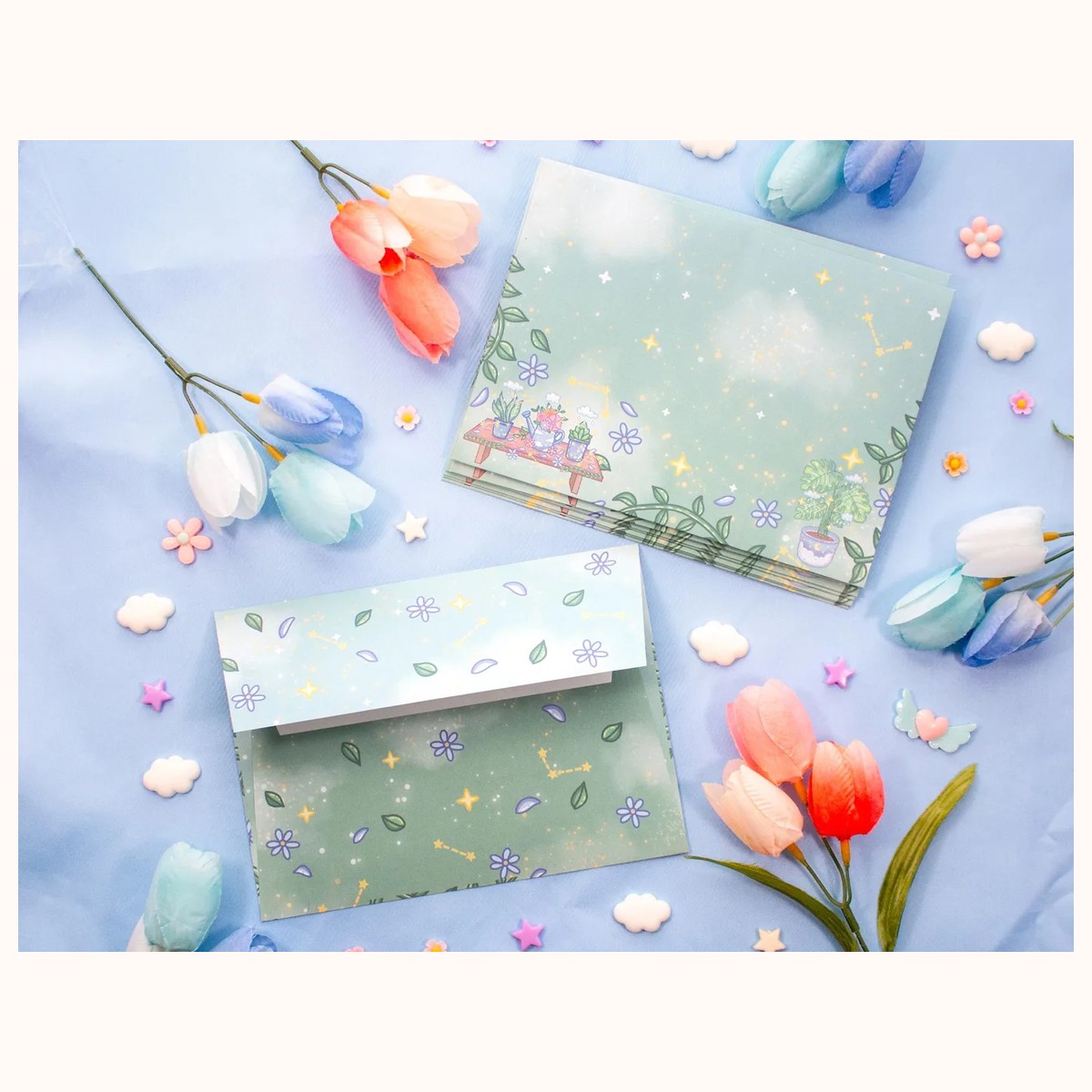
For example, Farouk Book Store’s Starry Clouds Note Cards are 3 x 5 inches and come as a bundle of 50 cards. One card can be treated as a small flat insert; the entire bundle is a different packing job because its thickness may crowd the envelope. If you are gifting the bundle, measure the complete stack and consider a larger mailer or gift sleeve rather than forcing it into an envelope intended for one card.
Match common note-card sizes to an envelope
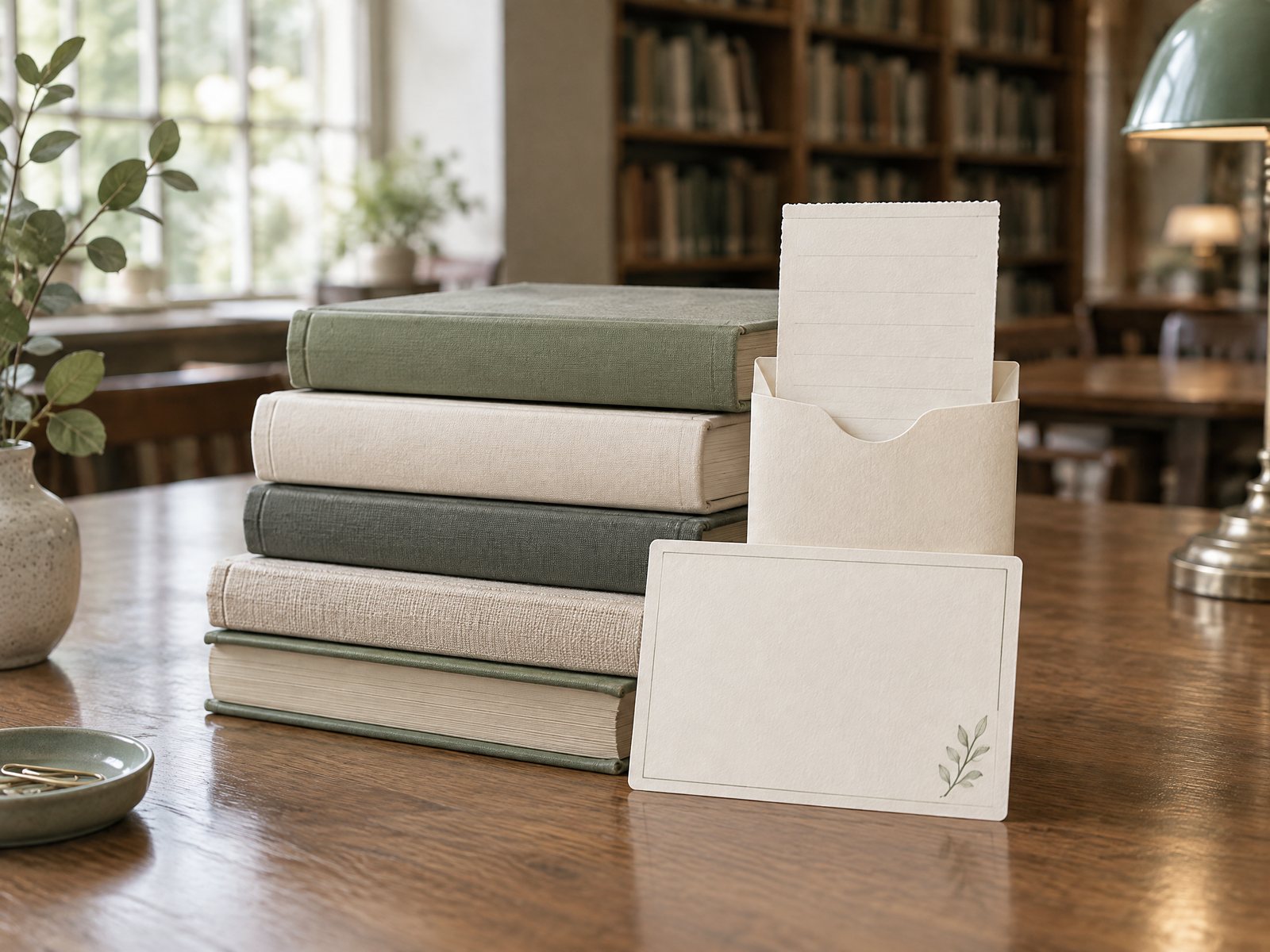
An A7 envelope is approximately 5.25 x 7.25 inches, making it substantially larger than a single 3 x 5 inch note card. That extra room can be useful for a short letter, a folded message, or a carefully arranged paper-gift bundle. It is not, however, a reason to fill the envelope without checking the stack: several cards, a memo pad, and decorative layers can quickly make the flap difficult to close.
Farouk’s Envelopes collection includes A7 sets suited to cards, notes, invitations, and correspondence. For a specific example, Botanical Bliss Envelopes are listed at approximately 5.25 x 7.25 inches and come as a set of 10. The catalog describes full-color printing on both sides and inside, 70 lb paper, and a moisture seal. Those details make the set a practical option when presentation matters, but the best choice still depends on what you are placing inside.
Use this decision guide:
- One 3 x 5 note card: An A7 envelope should provide comfortable room. Place the card near the center rather than pushing it tightly into a corner.
- A small stack of 3 x 5 cards: Test the thickness before committing. If the stack reaches the fold of the flap or makes the seams bulge, use a roomier format or separate the cards.
- A folded letter with a card: Measure the closed letter and card together. Arrange them flat, with the thicker piece away from the flap fold.
- A 2 x 6 bookmark: Check its diagonal movement inside the envelope. It may fit by dimensions but catch at the corners if it is stiff or has a wide top edge.
- A 4 x 6 sticker sheet or memo page: Protect the corners with a flat backing sheet if the envelope has noticeable spare room. This limits sliding and helps the sheet stay flat.
If you are unsure between two sizes, choose the smaller envelope only when the item slides in smoothly and the flap closes without pressure. Choose the larger one when you are adding layers, a gift note, or any piece that must remain uncreased. An envelope that is technically large enough can still be the wrong choice if the opening is narrow or the contents are rigid.
Pack small paper gifts without crushing or bending them
Sizing is only half the solution; arrangement controls how the contents behave. Start by placing the flattest, most flexible piece against the back panel. Put a bookmark or single note card on top of that base. If you are including stickers, keep the sheet flat rather than rolling it. For a thicker memo pad, place it centrally so its edges do not press directly into the side seams.
A simple paper-bundle order works well:
1. Flat backing sheet or folded letter. 2. Note card or card set, aligned on one edge. 3. Bookmark, sticker sheet, or small message placed on top. 4. Optional decorative paper, kept away from the flap fold.
Do a dry fit before sealing. Slide the contents in halfway, then remove them and inspect the edges. If a corner catches, rotate the item slightly and test again; if it still catches, the envelope is too tight in practice even if the listed dimensions appear sufficient. Next, close the flap without activating the seal. The flap should lie flat, and the contents should not push a visible ridge into it.
Watch for four warning signs:
- The envelope bows in the center when held by its edges.
- The flap lifts or lands partly on the contents.
- A rigid card touches the side seams at two points.
- The bundle slides audibly from end to end when gently moved.
When using a moisture-activated seal, close the flap only after the contents are positioned. Press along the flap from the center outward so it lies evenly. If the flap is under tension, stop and repack rather than relying on the adhesive to hold a crowded bundle. For decorative envelopes, keep stickers or tape away from the sealing area unless you want them to become part of the closure; extra layers there can prevent a clean contact.
Troubleshoot the fit before you choose a set
“The card fits, but the flap will not close.” Measure the thickness at the flap fold, not just the card’s face. A second card, a thick memo pad, or a folded paper insert may be occupying the space needed for the flap. Remove one layer, reposition the stack lower in the envelope, or choose a larger format.
“The card goes in, but the corners bend.” The opening may be narrower than the envelope body, or the item may be entering at an angle. Try feeding the leading edge evenly with both hands. If the card still catches, do not force it; use an envelope with a wider practical opening or protect the corner with a slightly larger backing sheet.
“The sticker sheet keeps sliding around.” Add a flat card behind it, align the sheet with the envelope’s long edge, and avoid placing it next to a loose bookmark. The goal is a stable stack, not a tightly packed one. If the sheet is precious or has raised decoration, use a protective sleeve or rigid mailer instead of treating a stationery envelope as rigid packaging.
“The envelope looks empty and the contents crease.” Too much interior clearance allows movement. Add a coordinated note card or a single flat backing sheet, or select a smaller envelope if the complete bundle still has a comfortable opening. Do not add bulky filler just to remove empty space.
“I am sending several note cards together.” Count the cards and test a complete stack. A 3 x 5 card envelope choice that works for one card may fail for ten. Separate cards into two envelopes when the stack becomes difficult to insert, or use a larger protective mailer for the whole set. If the item will be mailed, verify the final packed dimensions and any postal requirements with the carrier before sealing; envelope fit and postal acceptance are separate questions.
For help confirming a catalog measurement or finding the closest available style, use Farouk Book Store’s contact page. Product photos and listed dimensions are useful starting points, but your exact combination of cards and inserts should always receive a physical dry fit. Once the envelope closes flat, the contents stay aligned, and no corner is under pressure, you have a dependable size for that particular paper gift.
Related reading: Why Handwritten Greeting Cards Still Matter · How to Build a Personalized Gift Bundle · Why Small Gifts Create Big Connections