A book sleeve vs book cover comparison becomes much easier when you separate the job each item performs. A sleeve surrounds a book while it travels outside your bag, helping protect the whole item from rubbing, light knocks, and nearby clutter. A cover stays attached to the book, protecting the outside boards or paperback surface during reading and handling. Neither is automatically “better”; the right choice depends on where damage is happening and how you use the book.
What a book cover protects while you read
A book cover is an attached layer around a book’s exterior. Depending on its design, it can shield the front and back from fingerprints, desk contact, scuffs, and repeated handling. It can also give a paperback’s flexible covers more structure while you hold it. The key benefit is access: the protection remains in place as you open the book, read on a commute, or set it down between chapters.
Think about the damage your book receives during reading. If the corners are bending in your hands, the cover is being placed on rough surfaces, or the printed exterior is getting marked, an attached cover addresses those moments directly. It is less useful for loose items in a tote, where pens, chargers, keys, and water bottles can press against the book from every side.
A cover is also practical when you switch locations frequently but do not want an extra removal step. You can open the book without taking it out of anything. That convenience matters for a textbook used in several classes, a journal carried from desk to desk, or a paperback read in short sessions throughout the day.
Do not assume that any cover fits any book. Check the product’s stated dimensions and compare them with the book closed. If a cover is too tight, forcing it on can stress corners or the binding. If it is too loose, the book may slide inside and still rub against the edges. Measure height, width, and closed thickness, then allow only the amount of room the design calls for.
A cover will not make a book waterproof, and it is not a substitute for careful handling around drinks, rain, or damp surfaces. If a spill is the main concern, move the book away from the source first. For cleaning, follow the item’s care guidance and use a dry or barely damp cloth only when the surface is known to tolerate it. Avoid saturating the book itself.
What a book sleeve protects in transit
A book sleeve is a removable pouch that holds the book while it is in a bag, on a shelf, or being carried between places. A padded sleeve can create a buffer against scratches and light impacts. A zipper or other closure helps keep the book inside and reduces the chance that it will slide out when a bag is tipped over. This makes a sleeve especially useful for commuters, students, library users, and readers who carry more than one item together.
The sleeve’s protection is broader than a cover’s because it can separate the book from neighboring objects. A pen may leave a mark, a notebook spiral may press into a paperback, or a laptop charger may scrape a dust jacket. A sleeve places another layer between those objects and the book. It can also reduce surface-to-surface rubbing when a book moves around inside a backpack.
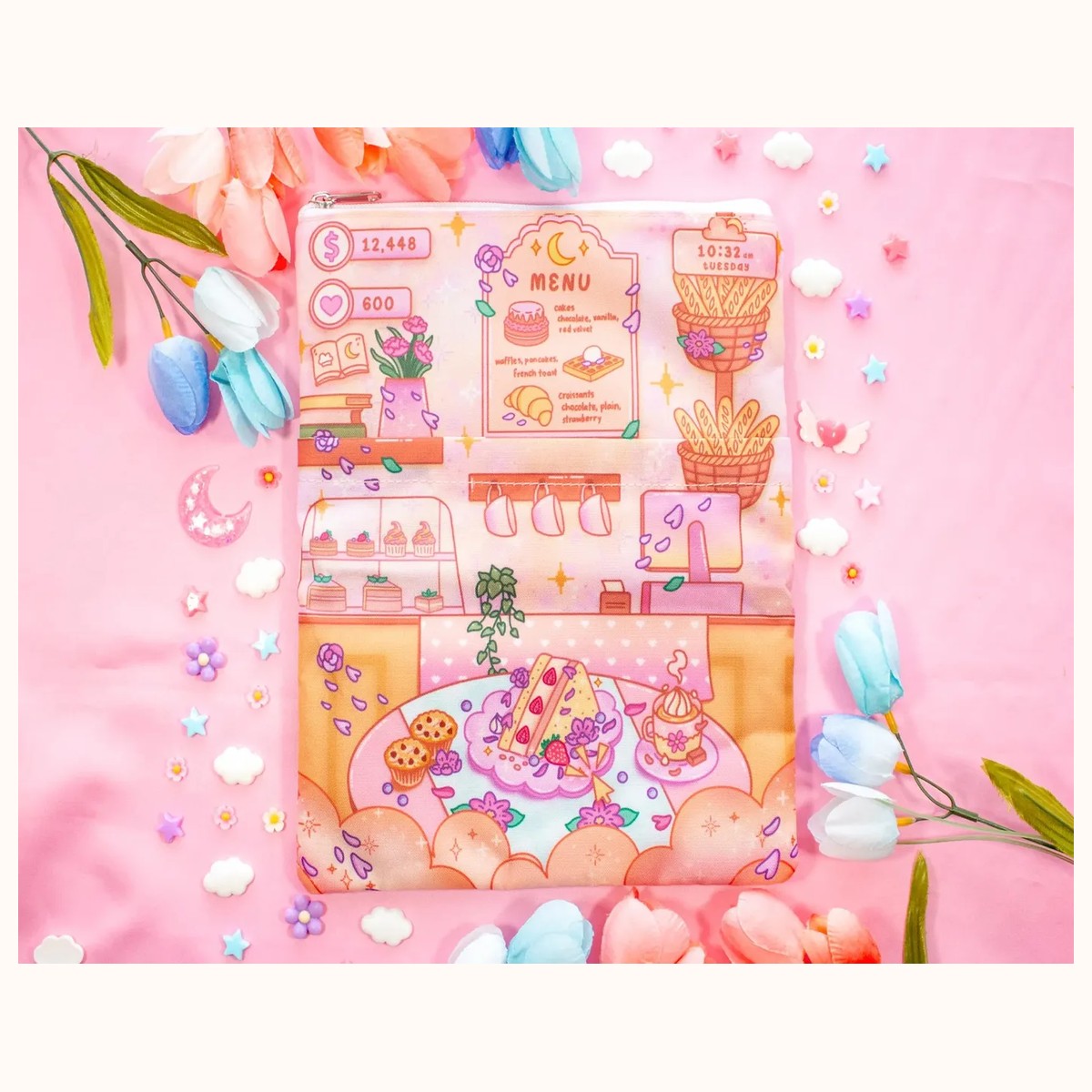
For a catalog example, the Cafe Quest Book Sleeve With Zipper and Pocket is listed as a padded sleeve with a polyester canvas exterior, full-length zipper, and exterior back pocket. Its approximate overall size is 9 x 12 inches, and the listing says it fits a 7 x 9 inch notebook, books, and an 11-inch iPad Pro model or similarly sized tablets. Treat those as guidance, not a guarantee: measure your specific book or device before ordering.
The sleeve protects during transit, but it is not usually the best place to read. You must remove the book, set the sleeve somewhere clean, and then put the book back when finished. A zipper can also catch a page or corner if the book is pushed in carelessly. Keep the zipper fully open, insert the book spine-first or according to the sleeve’s shape, and close it only after all edges are inside.
A sleeve is not automatically rainproof or crush-proof. “Padded” should be understood as light everyday cushioning unless the listing says otherwise. Keep it away from heavy pressure, sharp objects, and open liquids. If the sleeve becomes damp, remove the book promptly and let both items dry separately in a ventilated place; do not trap a damp book inside a closed pouch.
Book sleeve vs book cover: choosing by situation
Choose an attached cover when the problem occurs during reading. It suits a book that is handled often, rests on shared surfaces, or needs a little more structure in your hands. It is also the simpler option when you want protection without carrying another accessory. A cover can stay on a favorite paperback or journal every day, so long as the fit does not interfere with opening or place pressure on the spine.
Choose a sleeve when the problem occurs between destinations. It is the stronger match for a book carried beside technology, stationery, or personal items. A sleeve is also useful when you want to protect a clean book from the inside of a backpack or keep a book separate from a lunch container. The removable format lets you use one sleeve for several similarly sized books, provided each one fits without force.
Use both when the book is valuable to you and faces two different kinds of wear. The cover handles reading and daily contact. The sleeve handles the journey. For example, an attached cover can stay on a paperback during a study session, while the covered book goes into a padded sleeve before it enters a crowded backpack. This is layered protection, not a promise against every type of damage, so still keep the bag dry and avoid placing weight on the book.
Here is a practical decision test:
- If you need protection while the book is open, start with a cover.
- If you need separation from objects in a bag, start with a sleeve.
- If you carry a book only occasionally and already use a careful, uncluttered bag, a sleeve may be enough.
- If the book is handled constantly but rarely transported, an attached cover may be the more convenient choice.
- If the book is an unusual size, measure first and confirm fit before choosing either option.
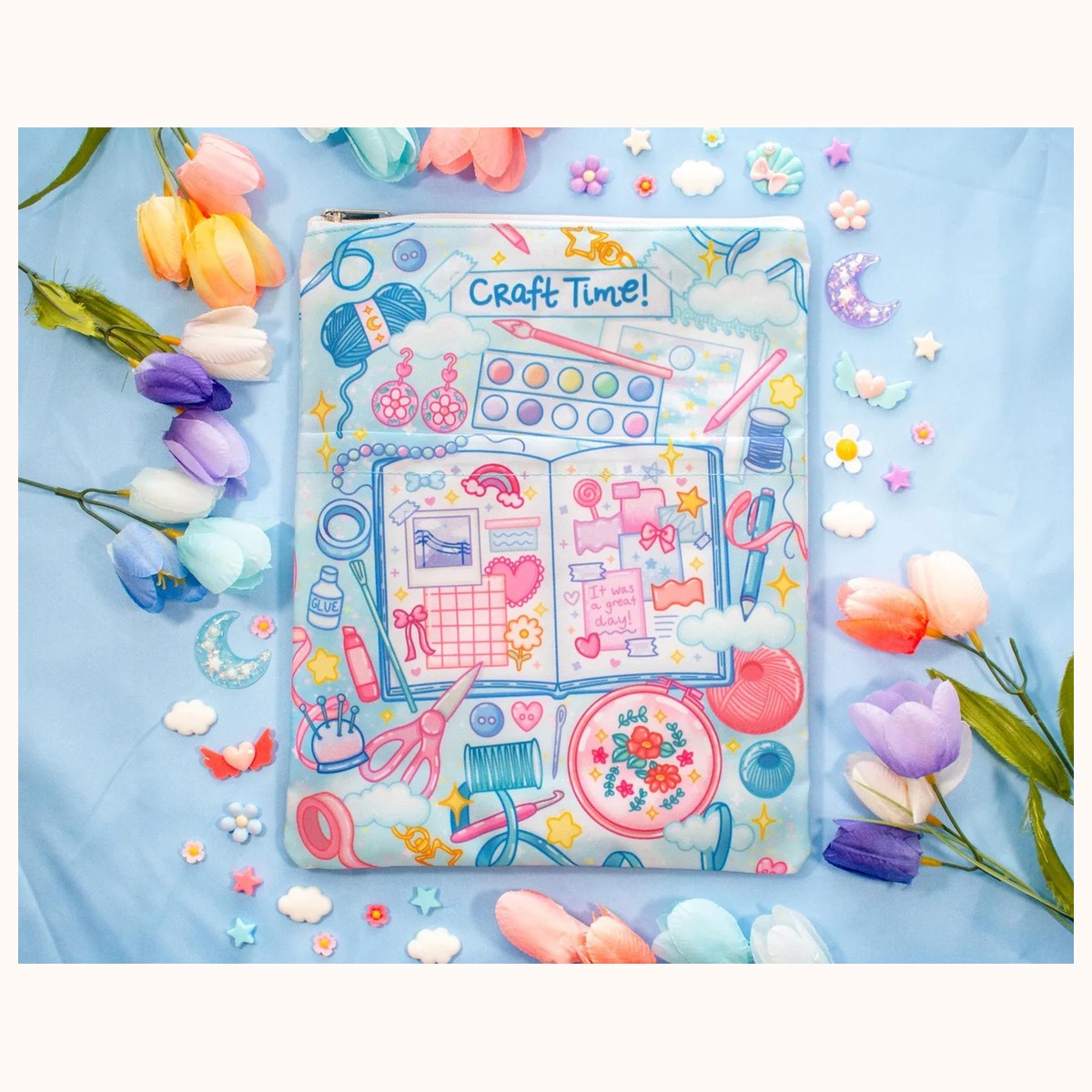
Farouk’s Book Covers collection is the most direct place to compare available sleeves. The Game Time Book Sleeve With Zipper and Pocket and Craft Time Book Sleeve With Zipper and Pocket are both listed at approximately 9 x 12 inches, with room described for a 7 x 9 inch notebook, paperback, or similarly sized tablet. Compare the design you prefer, then verify your item’s measurements rather than relying on the product name alone.
When you are unsure, consider the replacement cost and the book’s role. A disposable reading copy may need only sensible bag organization. A signed book, work notebook, or frequently borrowed library book may justify a sleeve, a cover, or both. The best choice is the smallest layer that solves the actual risk without making the book awkward to use.
Fit, loading, and care troubleshooting
A correct fit begins with the book closed. Measure from the bottom edge to the top edge, then across the front, and finally across the closed spine. Include a dust jacket if you plan to keep it on. For a tablet, include any case or keyboard attachment that will travel inside the sleeve. Compare your measurements with the listing’s dimensions and leave practical room for insertion; do not stretch a zipper around an oversized item.
If a book will not slide in easily, stop and check whether it is catching on a seam, pocket, or zipper. Do not pull on the pages or bend the cover to make it fit. For a sleeve, open the closure fully and guide the book in with the spine aligned to the sleeve’s base. If the item shifts substantially after insertion, it may be too loose for reliable transit protection.
If corners are still scuffing, inspect how the book is packed. A sleeve cannot prevent damage caused by keys or hard-edged devices pressing directly into one spot. Put the book in a separate compartment when possible, keep heavy objects on the opposite side, and avoid overfilling the bag. If a cover is sliding or bowing, recheck dimensions and remove extra layers that make the fit too tight.
Keep both products clean and dry. Empty a sleeve before cleaning it so small debris does not rub against the book. Let any dampness evaporate before closing the sleeve around a book. For questions about a particular item, its fit, or current catalog details, use Farouk’s contact page to verify before purchase.
The short answer is simple: a book cover protects the book while you use it, while a book sleeve protects the book while you carry or store it. Once you identify the moment when damage occurs, the decision becomes practical rather than confusing.
Related reading: How to Build a Personalized Gift Bundle · How to Choose Stickers for Journals and Planners · 2026 Stationery Trends: Color, Texture, and Joy